
If your animal has not had an annual check, book one today. ARAV directory at members.arav.org.
The annual vet check — five questions to ask, every visit.
An annual reptile vet visit costs $80–150 and catches the slow-developing issues you cannot. Use the visit fully — bring questions.
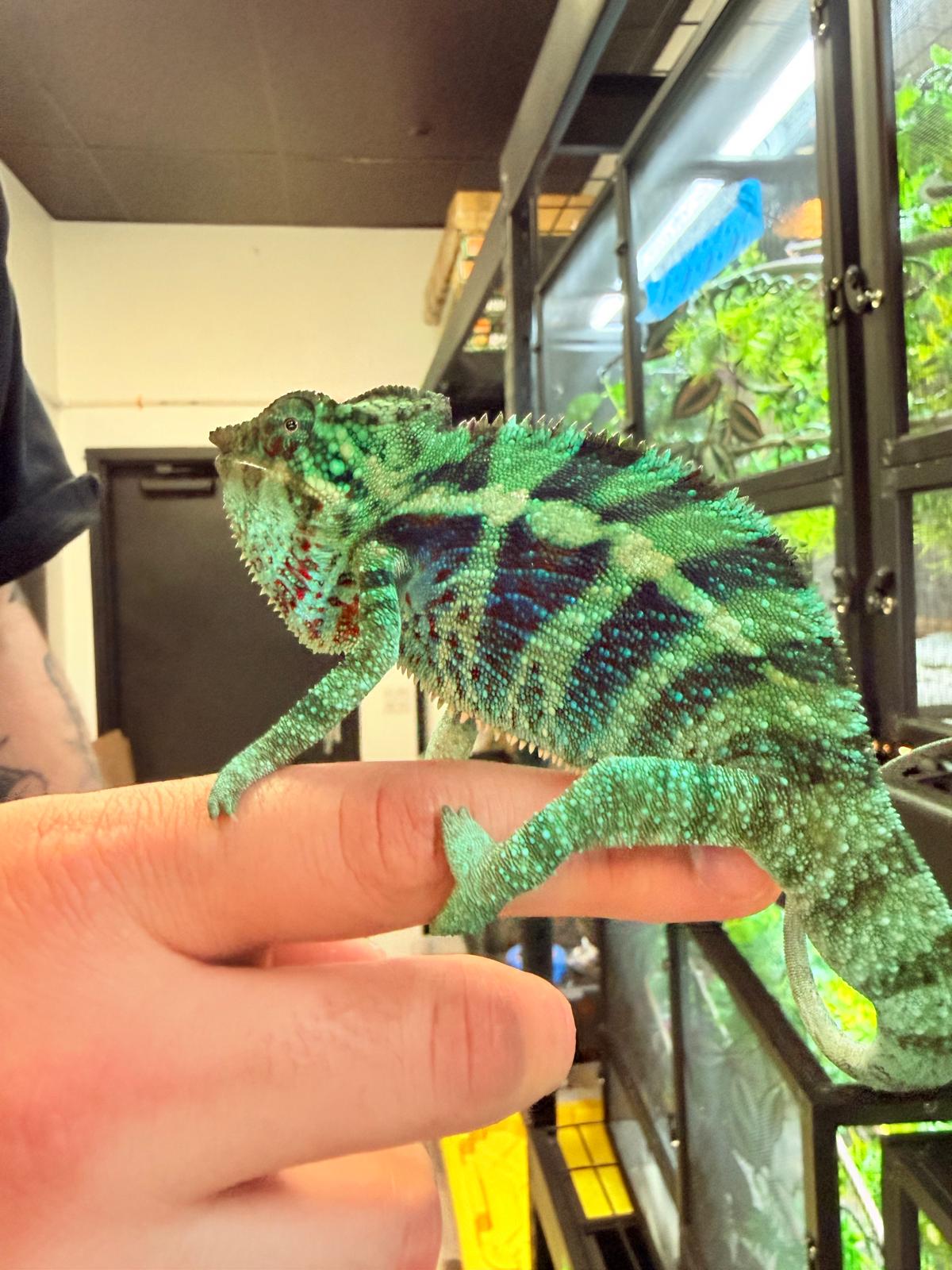
Once a year, every panther over 12 months should see an ARAV-listed reptile vet. Bring photos from the past 12 months, your weight log, your shed log, and any concerns you have logged. The vet will do a hands-on exam and most likely a fecal screen. The visit is paid for; use it.
Five questions worth asking every annual: (1) Is the body condition appropriate for age? (2) What does the casque condition tell you? (3) Are there any early warning signs in the eyes, mouth, or vent? (4) Given my care, anything you'd change? (5) Anything I should be watching for over the next 12 months specific to this animal? The answers vary year to year and per animal.
DSQUARED Reptiles — Living Art. Curated Genetics.
From the field notes archive.
The morning baseline photograph.
A single weekly photo, taken at the same hour and angle, will tell you more about your care than any forum thread ever could.
Tightening screen tension on a year-old cage.
After twelve months of misting cycles and live plant weight, screen panels sag in ways that quietly compromise climbing surfaces.
A 72-hour gutload window for dubia roaches.
Dubia gutloads peak somewhere between 48 and 72 hours after the colony moves onto a fresh diet. Here's the schedule we run.