
Measure your basking surface temperature today with a probe thermometer. If it is outside 88–92°F, plan a wattage swap.
Basking lamp wattage depends on the room, not the cage.
A 75W lamp in a cool basement room is the same as a 50W lamp in a warm living room. Choose by ambient air temperature, not cage size.
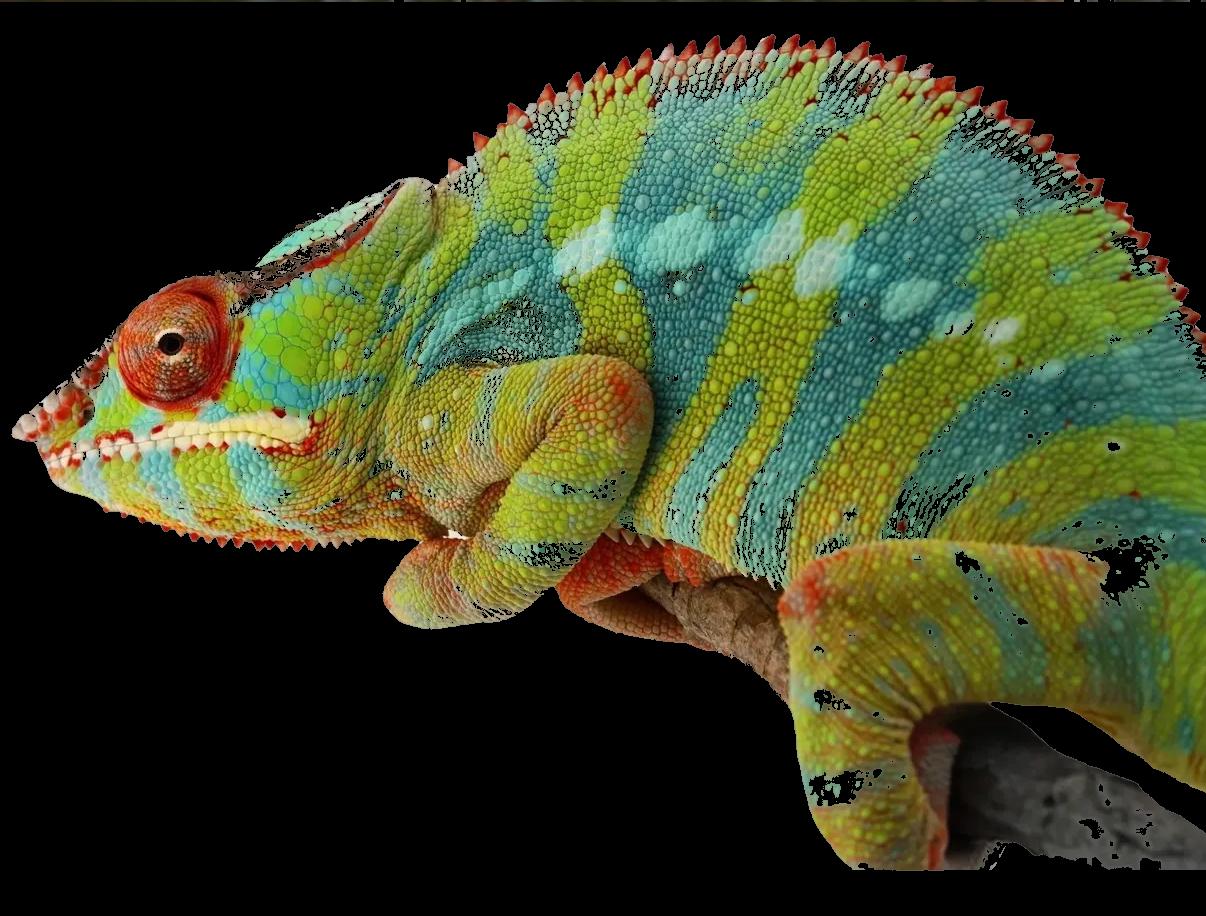
Wattage charts that recommend bulb sizes by cage dimensions are misleading. The variable that actually determines basking surface temperature is the difference between ambient room temperature and your target basking spot. A 24×24×48 cage in a 65°F basement room needs more wattage to hit a 92°F basking surface than the same cage in a 75°F living room.
Start with a 60W incandescent or 50W halogen, measure the basking surface temp with a probe thermometer after 90 minutes of operation, and adjust wattage up or down by 15W increments until you hit 88–92°F at the chameleon's basking position. Re-measure when seasons change — winter heating drops ambient room temp and shifts your math.
DSQUARED Reptiles — Living Art. Curated Genetics.
From the field notes archive.
The morning baseline photograph.
A single weekly photo, taken at the same hour and angle, will tell you more about your care than any forum thread ever could.
Tightening screen tension on a year-old cage.
After twelve months of misting cycles and live plant weight, screen panels sag in ways that quietly compromise climbing surfaces.
A 72-hour gutload window for dubia roaches.
Dubia gutloads peak somewhere between 48 and 72 hours after the colony moves onto a fresh diet. Here's the schedule we run.