
Photograph your juvenile's casque from the front and side today. Compare to a photo from 60 days ago.
Casque deformation — when the curve goes wrong.
A healthy casque grows in a smooth curve. Asymmetric growth, soft spots, or a flattened crown signal calcium or UVB issues — usually both.
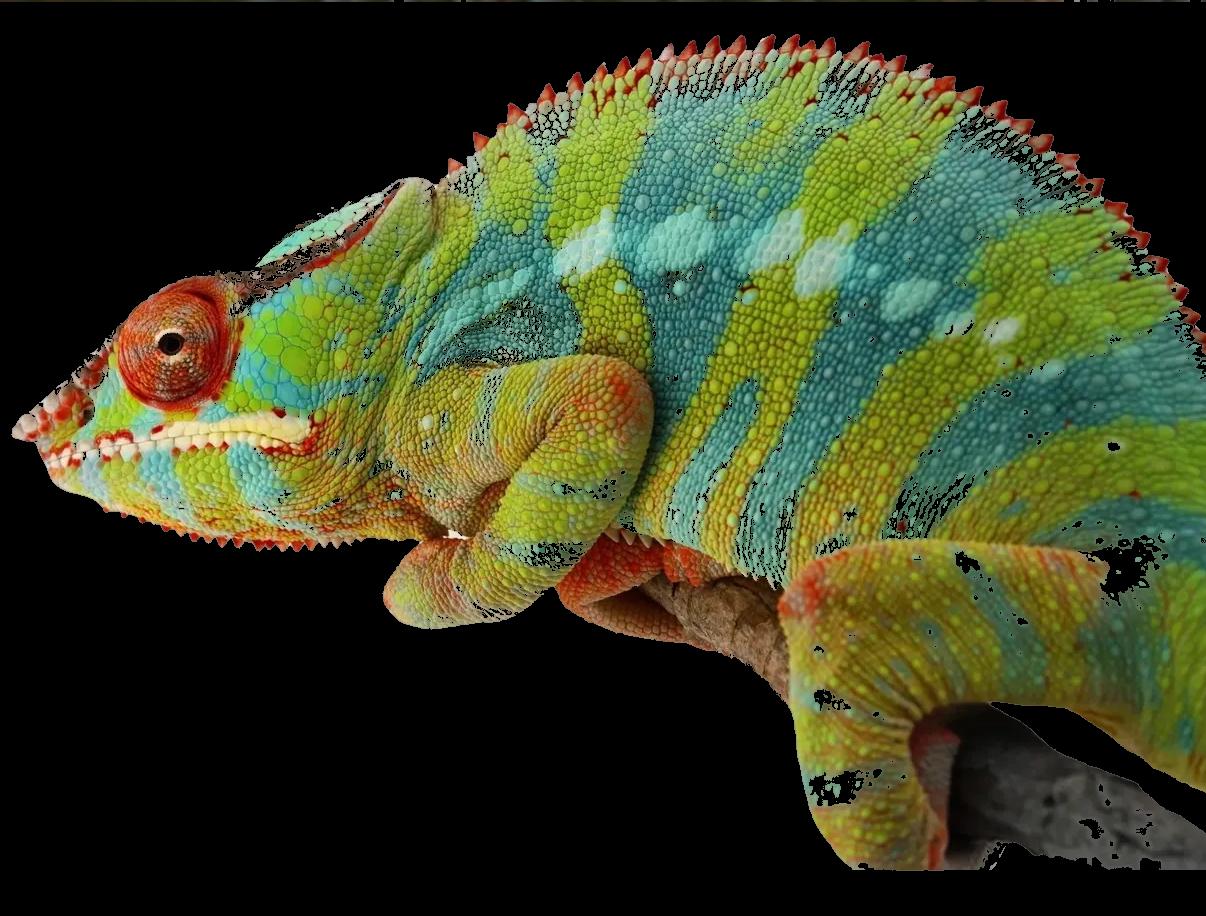
The casque (the bony crest on the head) is one of the most visible long-term indicators of care quality. In a healthy juvenile, it grows symmetrically with a smooth curve from front to back. Asymmetric growth, soft or pliable spots when gently palpated, or a flattened or sunken crown indicate calcium absorption issues — typically a UVB or supplement problem, often both.
Casque deformation in a juvenile under nine months is often partially correctable with prompt care intervention (verify UVB, increase calcium frequency, vet workup for D3 status). After full skeletal maturity (around 18 months), the casque shape is set. Catch it early.
DSQUARED Reptiles — Living Art. Curated Genetics.
From the field notes archive.
The morning baseline photograph.
A single weekly photo, taken at the same hour and angle, will tell you more about your care than any forum thread ever could.
Tightening screen tension on a year-old cage.
After twelve months of misting cycles and live plant weight, screen panels sag in ways that quietly compromise climbing surfaces.
A 72-hour gutload window for dubia roaches.
Dubia gutloads peak somewhere between 48 and 72 hours after the colony moves onto a fresh diet. Here's the schedule we run.