
Photograph your subadult male from the side this week. Compare in 90 days — coloration progress is most visible at quarter-year intervals.
Color development month by month — the projection timeline.
A male panther earns his color across nine months. Knowing the order of operations means you are not surprised by what shows up at month five.
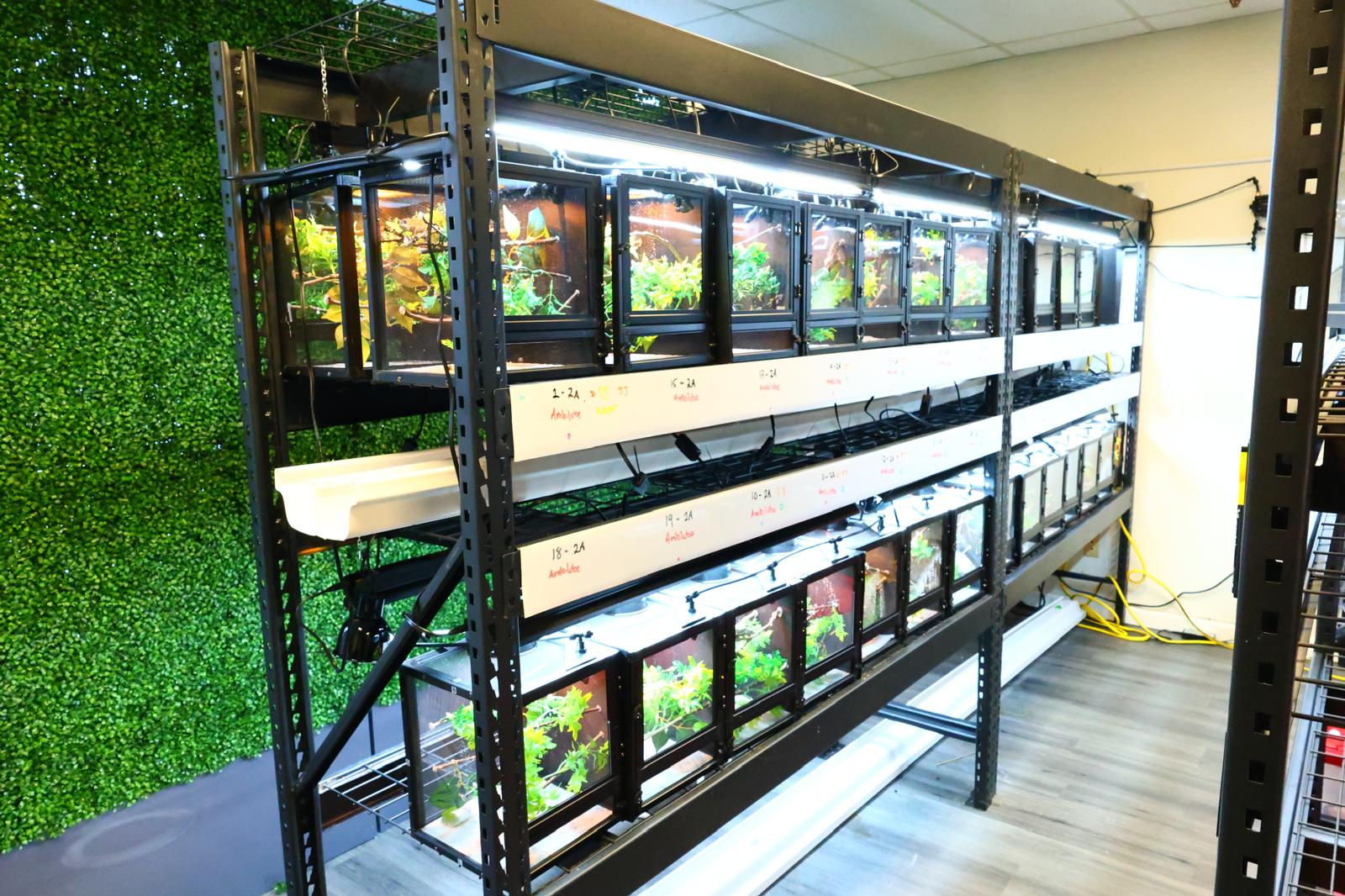
Lateral bars sharpen first, between months three and four. Body lateral tone follows at five to six. Casque saturation arrives at seven. Rostral process color, when present, fills in at eight to nine. Temporal vermiculation continues to deepen for another year past that.
If you bought a juvenile expecting a specific adult coloration, the early months will not show you what you bought. The lineage shows you what you bought; the animal grows into it on its own clock. Patience is a care skill.
DSQUARED Reptiles — Living Art. Curated Genetics.
From the field notes archive.
The morning baseline photograph.
A single weekly photo, taken at the same hour and angle, will tell you more about your care than any forum thread ever could.
Tightening screen tension on a year-old cage.
After twelve months of misting cycles and live plant weight, screen panels sag in ways that quietly compromise climbing surfaces.
A 72-hour gutload window for dubia roaches.
Dubia gutloads peak somewhere between 48 and 72 hours after the colony moves onto a fresh diet. Here's the schedule we run.