
Check your drainage tray right now. If it has standing water from yesterday's mist, shorten your mister cycle by 25%.
Drainage trays do the boring work — maintain them weekly.
A neglected drainage tray is the single most common cause of cage smell and the second most common cause of substrate mould.
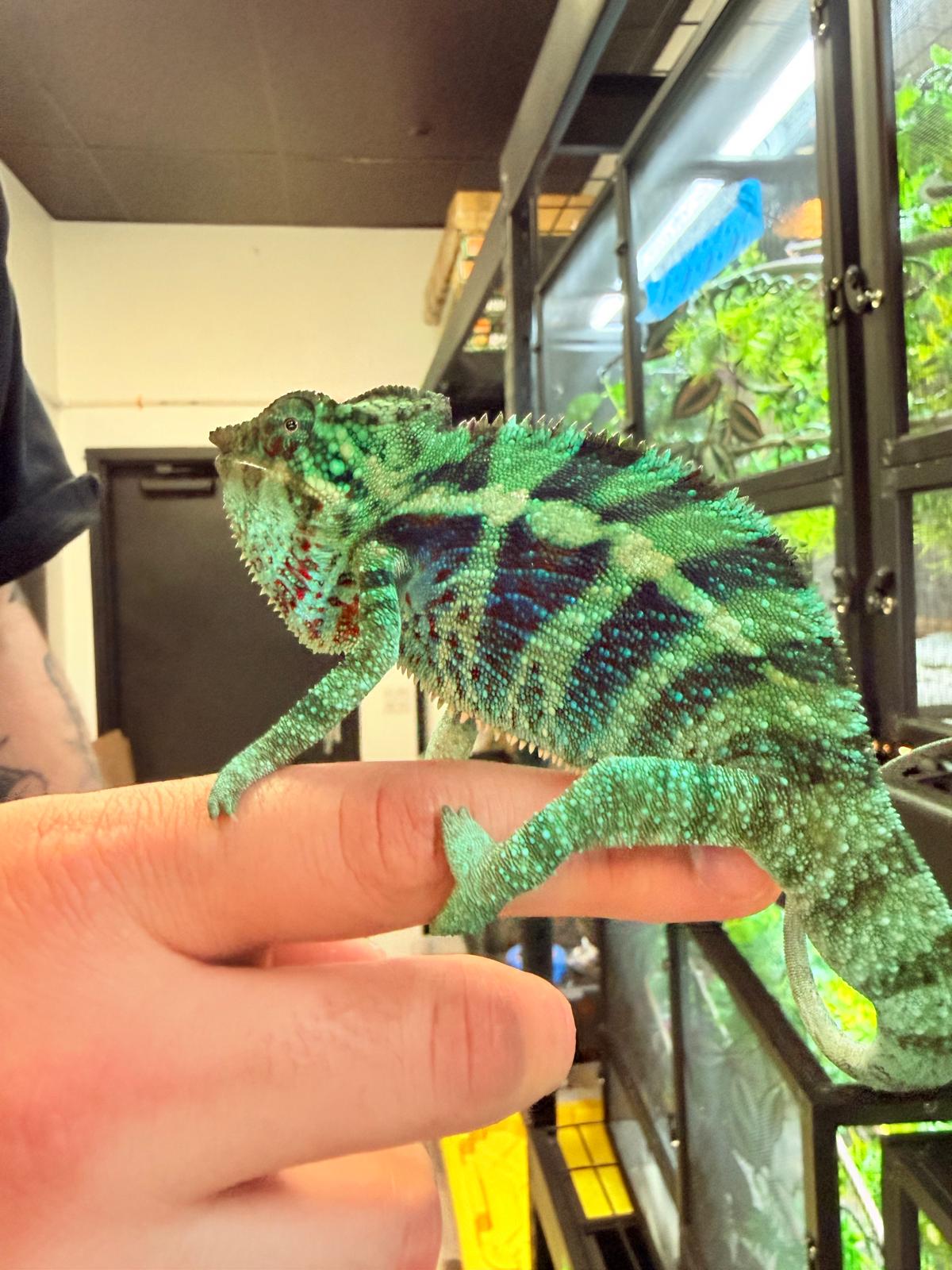
We slide the drainage tray out, dump it, scrub with hot water and a stiff brush, and slide it back. Two minutes per cage, once a week. Soap residue is more dangerous than a slightly dingy tray, so we never use detergent. If anything stronger is needed, F10SC at proper dilution, then a triple rinse, then full air-dry before re-installing.
Trays full of standing water for more than 48 hours grow gnats and worse. If your misting schedule produces more water than evaporates in a day, your misting cycle is too long, your drainage volume is too small, or both. A 24×24 cage in a 65% RH room should drain a few ounces per misting and air-dry between cycles.
DSQUARED Reptiles — Living Art. Curated Genetics.
From the field notes archive.
The morning baseline photograph.
A single weekly photo, taken at the same hour and angle, will tell you more about your care than any forum thread ever could.
Tightening screen tension on a year-old cage.
After twelve months of misting cycles and live plant weight, screen panels sag in ways that quietly compromise climbing surfaces.
A 72-hour gutload window for dubia roaches.
Dubia gutloads peak somewhere between 48 and 72 hours after the colony moves onto a fresh diet. Here's the schedule we run.