
Look at your back wall. If it is bare screen or PVC, plan a drip-wall installation for next month.
Drip walls — the rainforest illusion that actually delivers.
A back wall covered in dripping moss-on-cork is more than decoration. It produces a humidity microclimate the animal will discover and use.
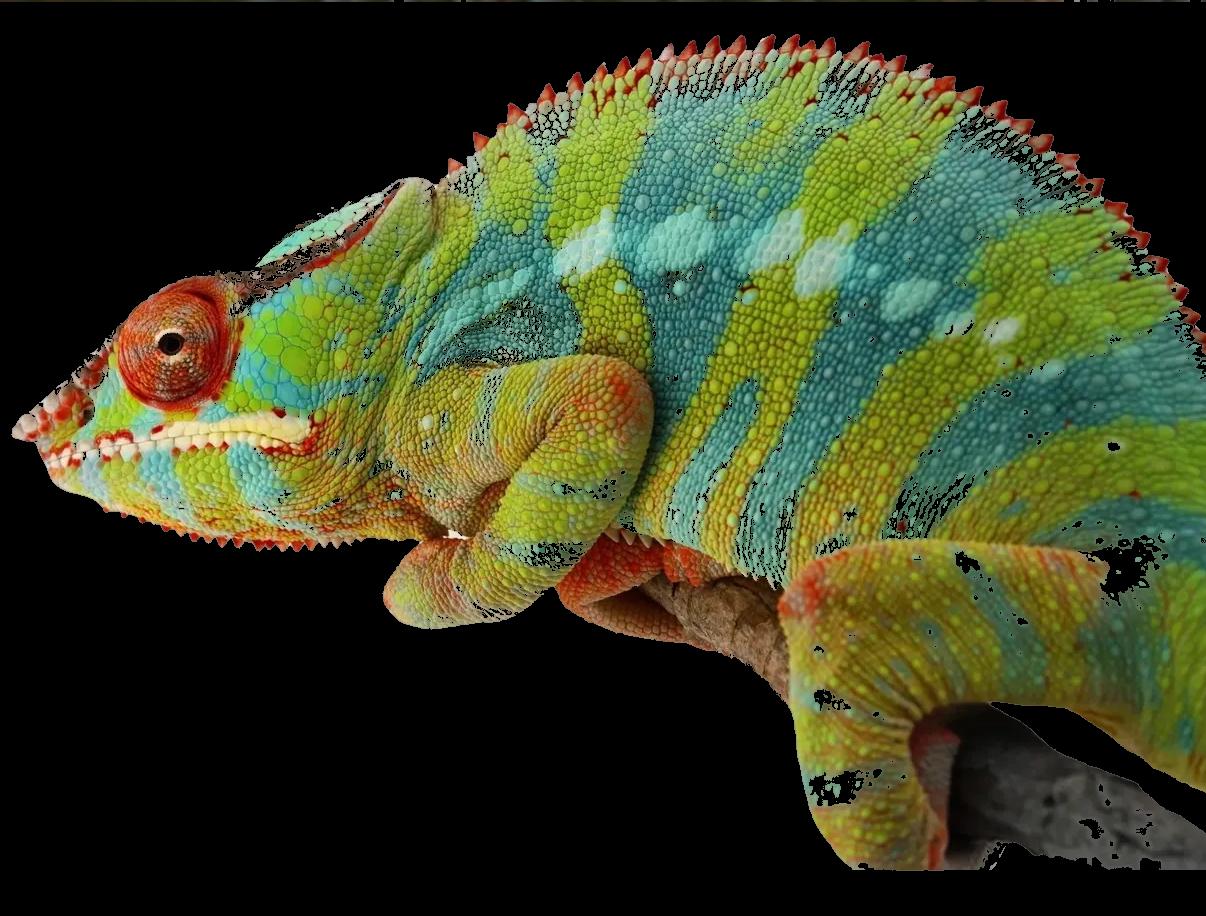
A drip wall is exactly what it sounds like: the back wall of the cage covered with cork bark or epiweb, with a slow drip from above so water trickles down through moss attached to the surface. It looks like a slice of rainforest understory. It also produces a localized high-humidity microclimate the chameleon will discover and use during shed cycles or after long basking sessions.
Build it once, maintain quarterly. The moss dries out periodically; rehydrate by hand-misting or by extending the morning misting cycle to soak it. Inspect for mold every two weeks. If any black mold appears, remove the affected section and replace — the rest of the wall is fine.
DSQUARED Reptiles — Living Art. Curated Genetics.
From the field notes archive.
The morning baseline photograph.
A single weekly photo, taken at the same hour and angle, will tell you more about your care than any forum thread ever could.
Tightening screen tension on a year-old cage.
After twelve months of misting cycles and live plant weight, screen panels sag in ways that quietly compromise climbing surfaces.
A 72-hour gutload window for dubia roaches.
Dubia gutloads peak somewhere between 48 and 72 hours after the colony moves onto a fresh diet. Here's the schedule we run.