
Take a head-on photo of both eyes today. File with the date. Compare in 48 hours if anything looks off.
Eye gunk: what it means and what it does not.
Brief end-of-day eye-rubbing is normal grooming. Persistent crust, swelling, or a closed eye through the morning is not — call the vet that week.
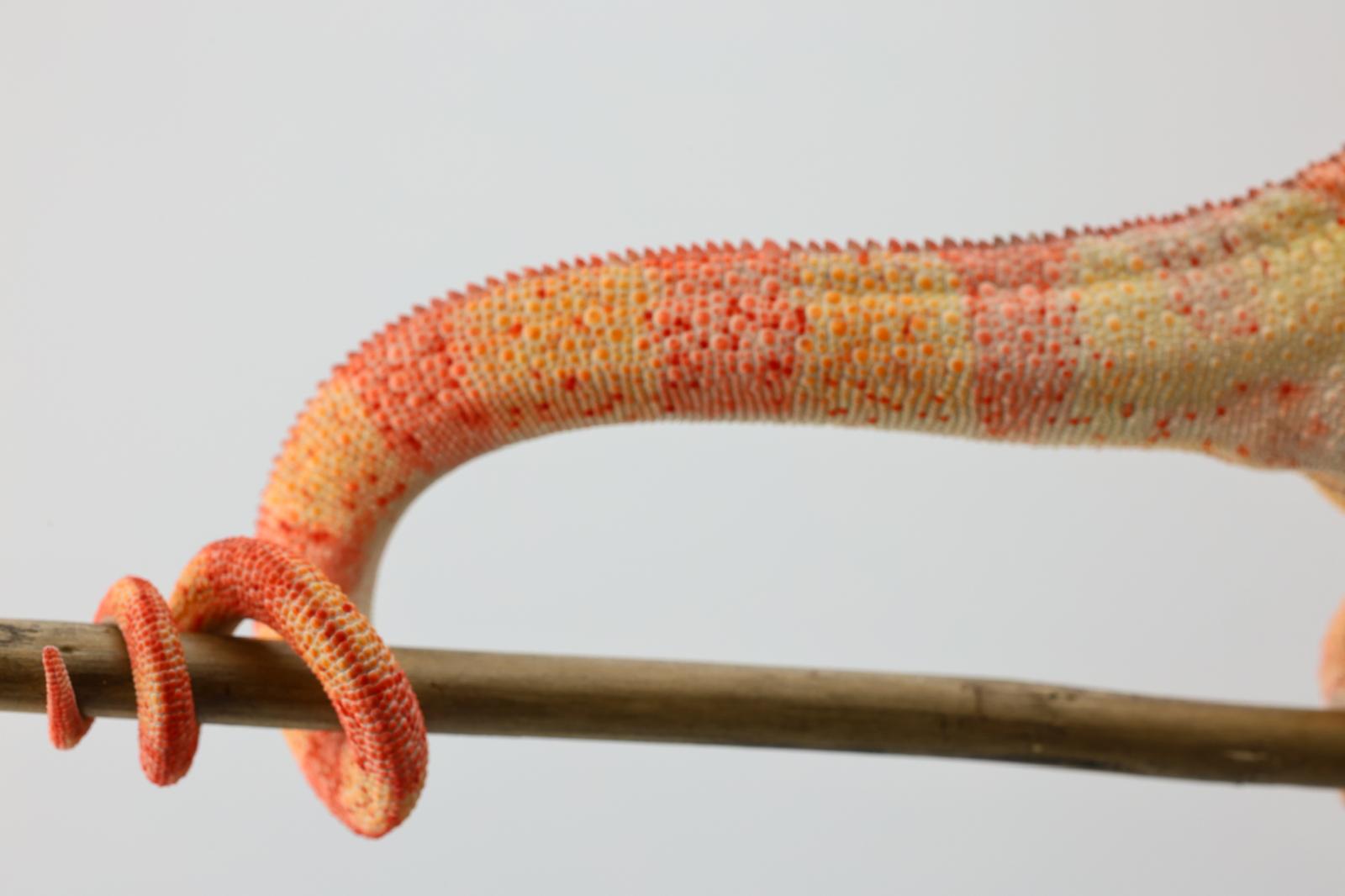
Chameleons clean their eyes by rotating the turret and pushing the lid against a leaf or branch. A bit of debris at the corner after a meal is fine. What is not fine: thick yellow discharge, asymmetric swelling, an eye held closed past mid-morning, or an animal that grooms one eye obsessively for more than a day.
Causes range from minor (a piece of substrate) to serious (UVB-related cornea damage from coil bulbs, vitamin A deficiency, or active infection). Photograph the eye in even light and date the photo. If symptoms persist past 48 hours, book the ARAV-listed reptile vet — eye issues escalate faster than most other complaints.
DSQUARED Reptiles — Living Art. Curated Genetics.
From the field notes archive.
The morning baseline photograph.
A single weekly photo, taken at the same hour and angle, will tell you more about your care than any forum thread ever could.
Tightening screen tension on a year-old cage.
After twelve months of misting cycles and live plant weight, screen panels sag in ways that quietly compromise climbing surfaces.
A 72-hour gutload window for dubia roaches.
Dubia gutloads peak somewhere between 48 and 72 hours after the colony moves onto a fresh diet. Here's the schedule we run.