
If your annual vet appointment is coming up, set a phone reminder to collect a fecal sample the morning of the visit.
The first fecal sample — collection, storage, and timing.
Bring a fresh fecal sample to the first vet appointment. Collection is simple; storage matters; timing is everything.
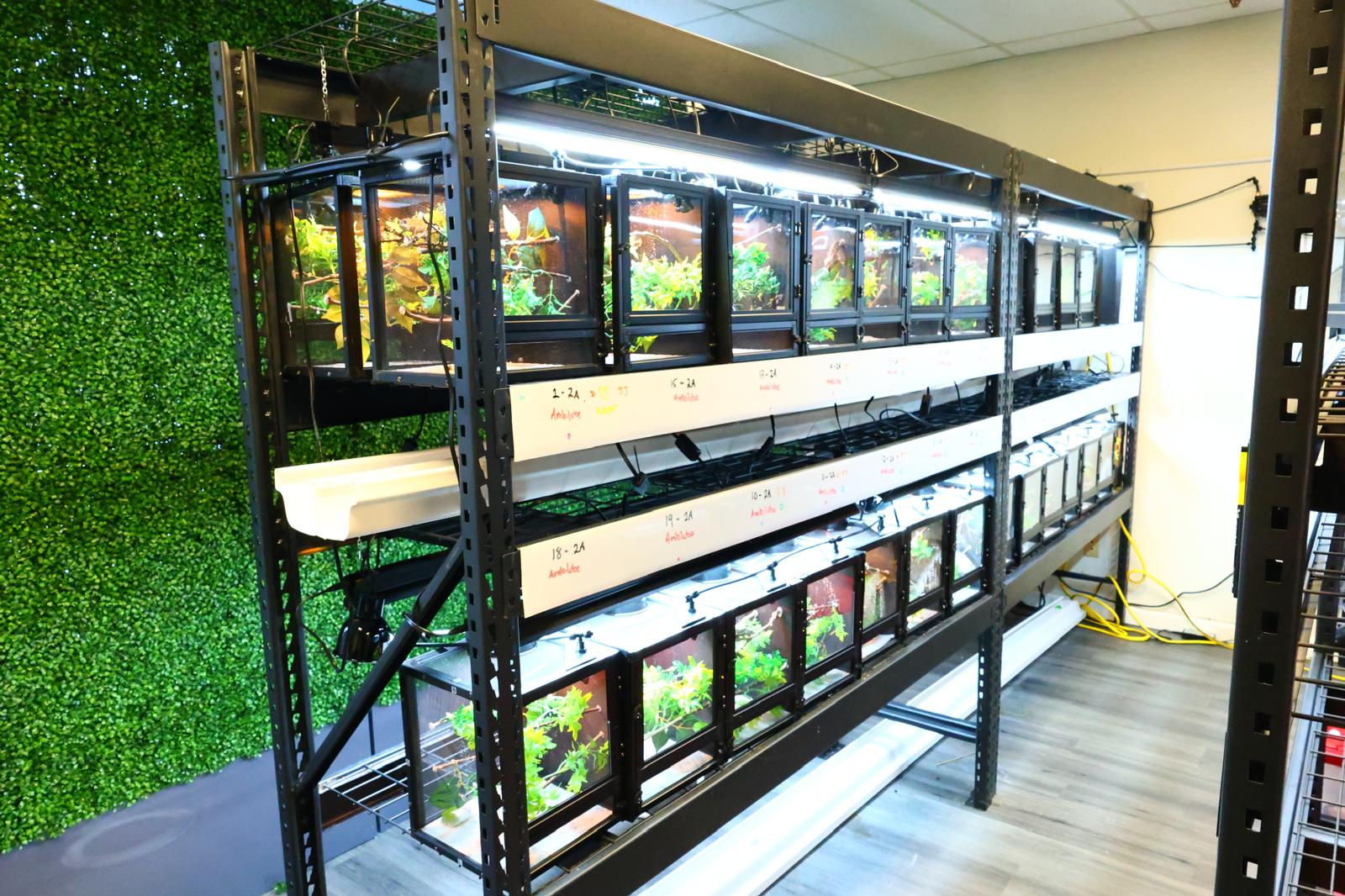
Fecal screens are how vets identify intestinal parasites that produce no outward symptoms until they are advanced. Collection: as soon as you see a fresh stool in the cage, scoop it (and the white urate cap if attached) into a clean container with a few drops of water to prevent drying. Refrigerate immediately — never freeze.
The sample needs to reach the vet within 24 hours of collection. If the appointment is two days out, plan to collect on the morning of the visit. Most ARAV vets will run the screen in-house or send to an external lab; results typically come back within a week.
DSQUARED Reptiles — Living Art. Curated Genetics.
From the field notes archive.
The morning baseline photograph.
A single weekly photo, taken at the same hour and angle, will tell you more about your care than any forum thread ever could.
Tightening screen tension on a year-old cage.
After twelve months of misting cycles and live plant weight, screen panels sag in ways that quietly compromise climbing surfaces.
A 72-hour gutload window for dubia roaches.
Dubia gutloads peak somewhere between 48 and 72 hours after the colony moves onto a fresh diet. Here's the schedule we run.