
If your cage plant has been struggling, check its pot — fertilized soil is the likely culprit. Re-pot in coco coir this weekend.
Three live plants that actually thrive in a chameleon cage.
Ficus benjamina, golden pothos, and schefflera arboricola. Pesticide-free, root-rinsed, and re-potted in coco coir before they enter the cage.
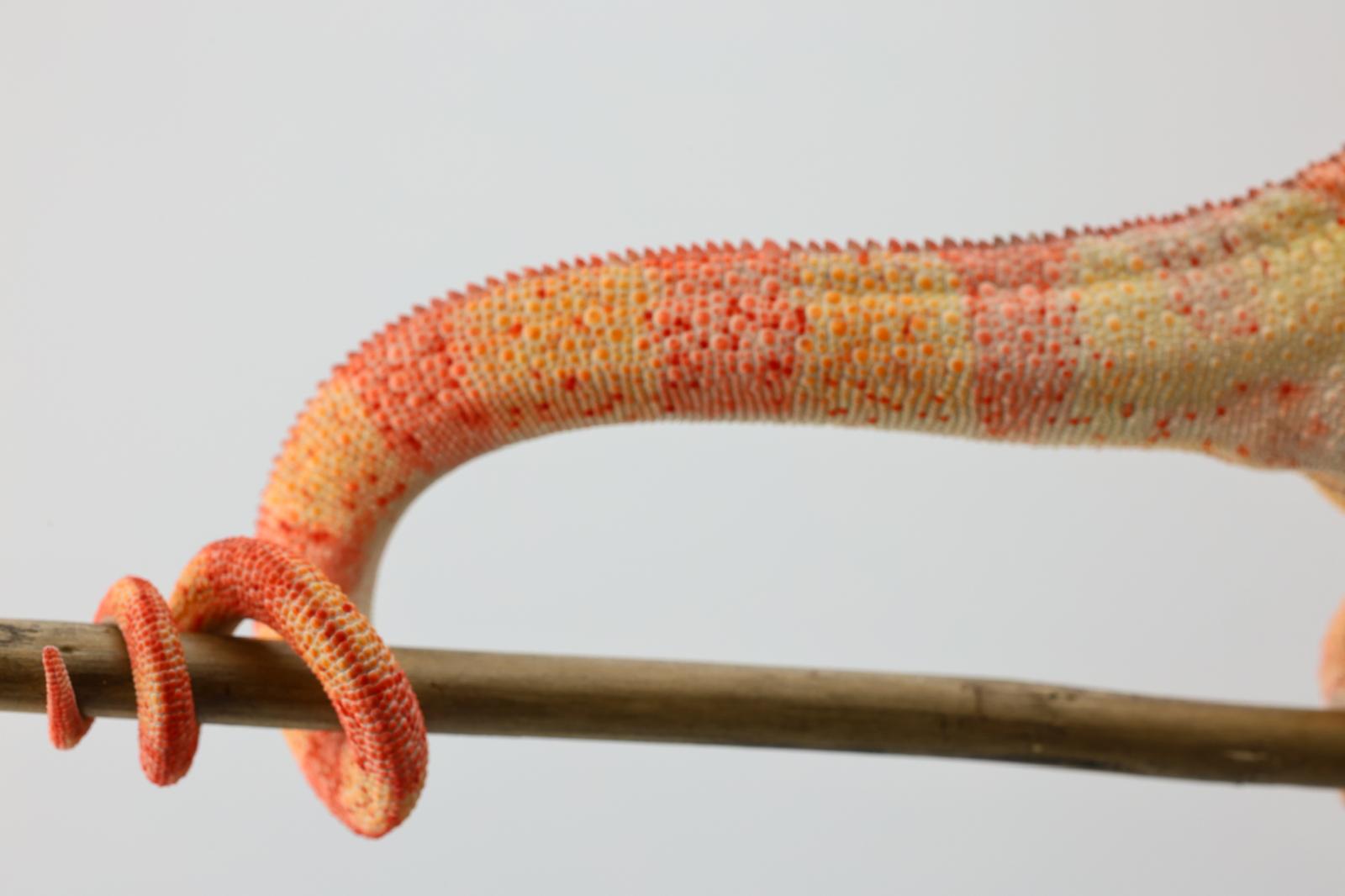
Most cage plants die because they were nursery-stock pesticide-treated, root-bound, or potted in fertilizer-rich soil that breaks down in the cage's humid environment. The fix is the same regardless of species: buy from a nursery that does not treat with neonicotinoids, rinse roots completely under hot water, and re-pot in plain coco coir or a chameleon-safe substrate before installation.
Ficus benjamina handles humidity and gives the chameleon thick branching to climb. Golden pothos thrives in lower-light corners and tolerates near-constant misting. Schefflera arboricola fills mid-canopy with broad shade leaves. All three are non-toxic, chameleon-tested across decades of keeping, and recover fast from accidental nibbles.
DSQUARED Reptiles — Living Art. Curated Genetics.
From the field notes archive.
The morning baseline photograph.
A single weekly photo, taken at the same hour and angle, will tell you more about your care than any forum thread ever could.
Tightening screen tension on a year-old cage.
After twelve months of misting cycles and live plant weight, screen panels sag in ways that quietly compromise climbing surfaces.
A 72-hour gutload window for dubia roaches.
Dubia gutloads peak somewhere between 48 and 72 hours after the colony moves onto a fresh diet. Here's the schedule we run.