
Watch your chameleon at the next misting cycle. Note which leaves they orient toward. Re-aim the nozzle to hit those leaves.
Where you point the misting nozzle determines hydration outcomes.
A nozzle pointed at empty space wets the cage. A nozzle pointed at the chameleon's preferred drinking leaves teaches the chameleon to drink.
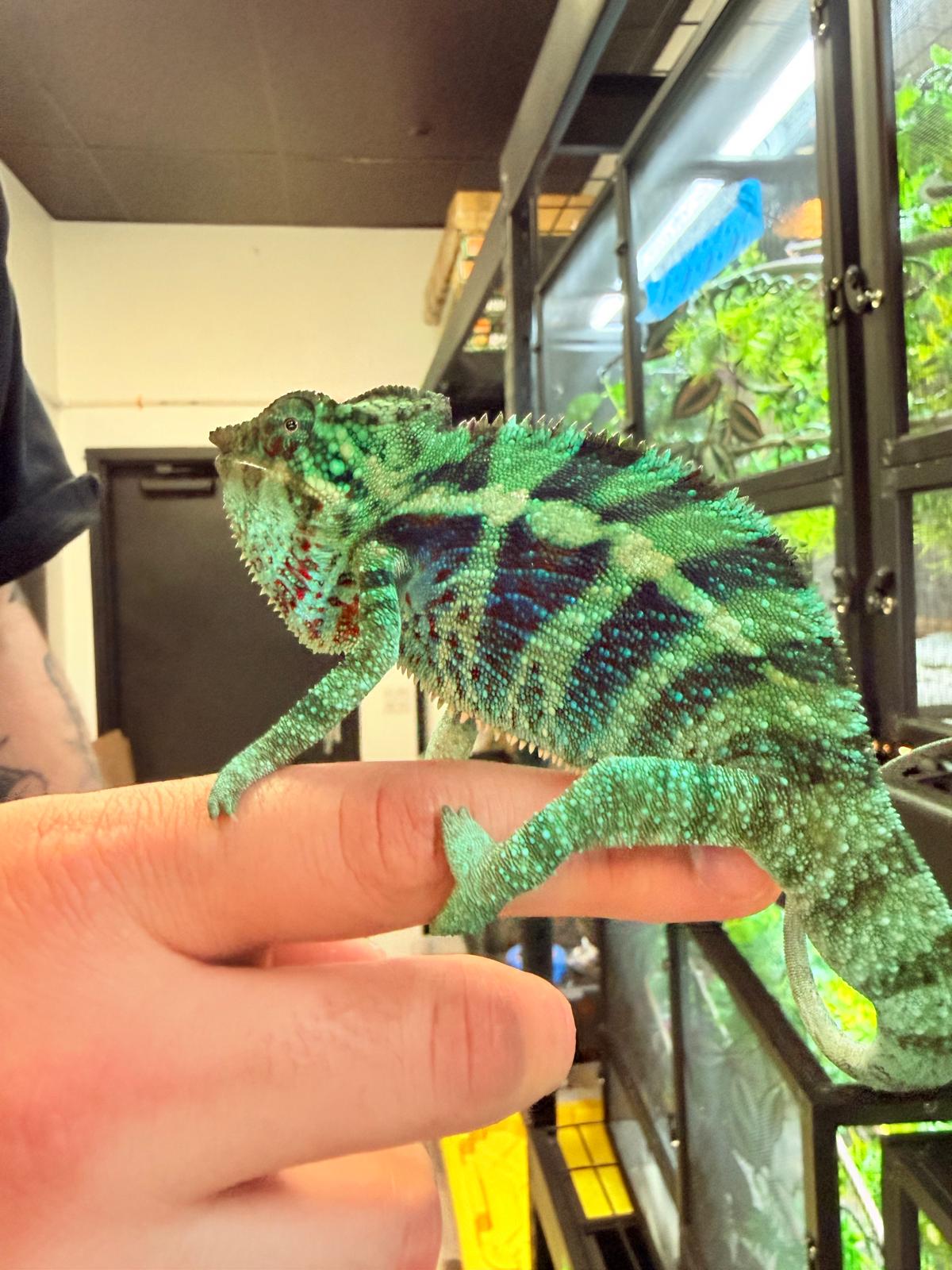
Most new keepers install misting nozzles at convenient mounting points and point them downward into the cage's middle. The result is a wet cage and a chameleon who drinks reluctantly because the moving water never lands on the leaves the animal is watching.
Better: identify the leaves the chameleon orients toward in the morning (usually 6–12 inches from the basking branch, on the side the animal faces). Aim the nozzle to land water on those leaves directly. Within a week, drinking response improves visibly.
DSQUARED Reptiles — Living Art. Curated Genetics.
From the field notes archive.
The morning baseline photograph.
A single weekly photo, taken at the same hour and angle, will tell you more about your care than any forum thread ever could.
Tightening screen tension on a year-old cage.
After twelve months of misting cycles and live plant weight, screen panels sag in ways that quietly compromise climbing surfaces.
A 72-hour gutload window for dubia roaches.
Dubia gutloads peak somewhere between 48 and 72 hours after the colony moves onto a fresh diet. Here's the schedule we run.