
If your cage has no live moss, plan to add a small handful of sphagnum next maintenance cycle.
Live moss — texture, humidity buffer, visual depth.
Sphagnum and reindeer moss tucked into branch crotches and substrate edges produce a chameleon-scale microclimate that the cage benefits from.
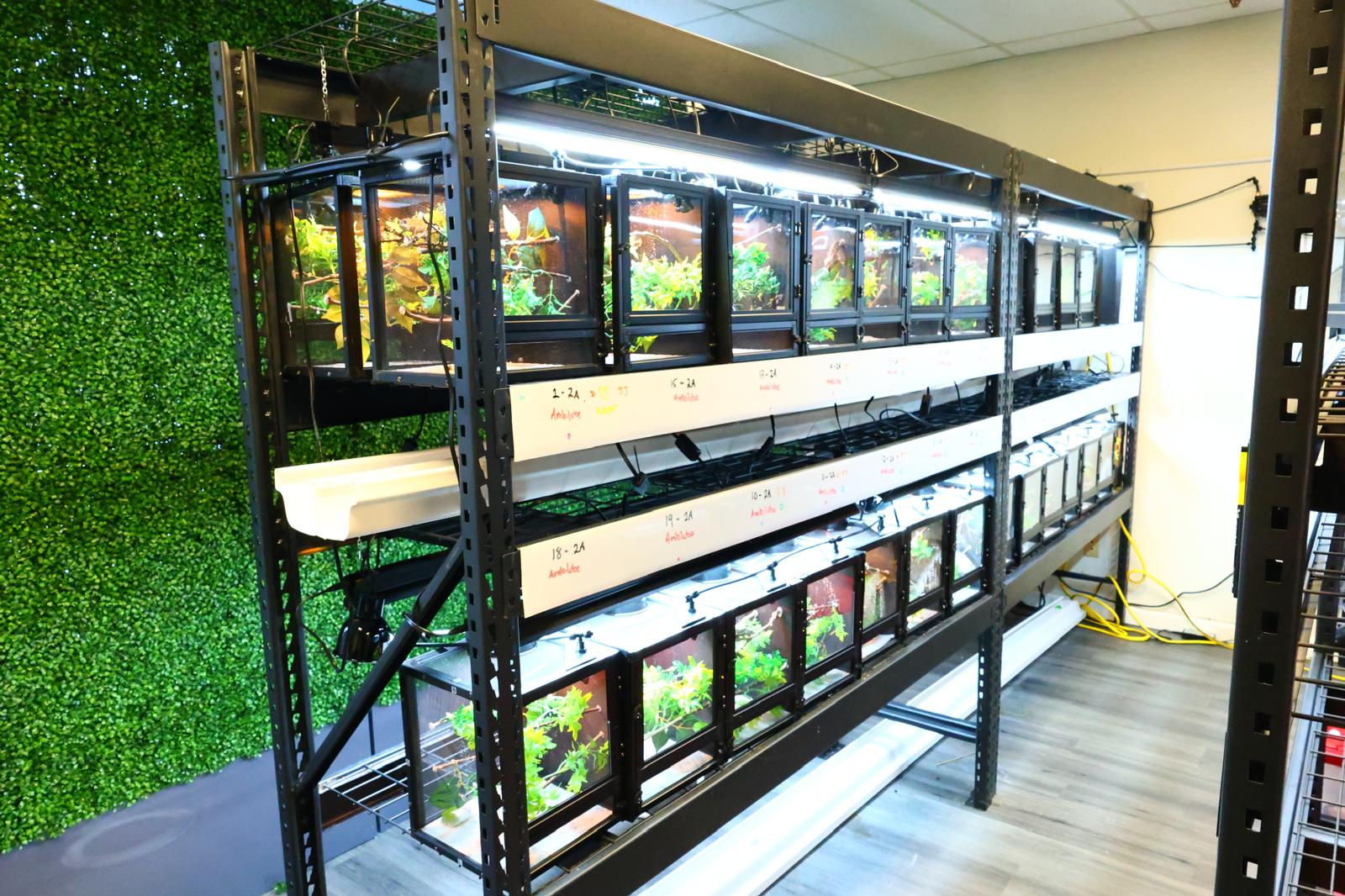
A handful of live sphagnum moss tucked into branch crotches and along substrate edges does three jobs at once: adds visual depth to the cage, holds humidity locally to buffer dry spells, and produces a fine-textured surface the chameleon's foot occasionally interacts with. Reindeer moss serves similar visual function but does not retain moisture as well.
Source moss from a reputable terrarium supplier — wild-collected moss can carry pesticide residues, parasites, or unwanted insect eggs. Refresh sphagnum every 2–3 months as it breaks down; reindeer moss can stay for 6 months or more with a light rinse.
DSQUARED Reptiles — Living Art. Curated Genetics.
From the field notes archive.
The morning baseline photograph.
A single weekly photo, taken at the same hour and angle, will tell you more about your care than any forum thread ever could.
Tightening screen tension on a year-old cage.
After twelve months of misting cycles and live plant weight, screen panels sag in ways that quietly compromise climbing surfaces.
A 72-hour gutload window for dubia roaches.
Dubia gutloads peak somewhere between 48 and 72 hours after the colony moves onto a fresh diet. Here's the schedule we run.