
If you have ever fed wild-caught insects, stop today. The convenience is not worth the risk.
Why we never feed wild-caught insects.
The bug in your backyard may carry pesticide residues, parasites, or a pathogen your captive animal has no immunity to.
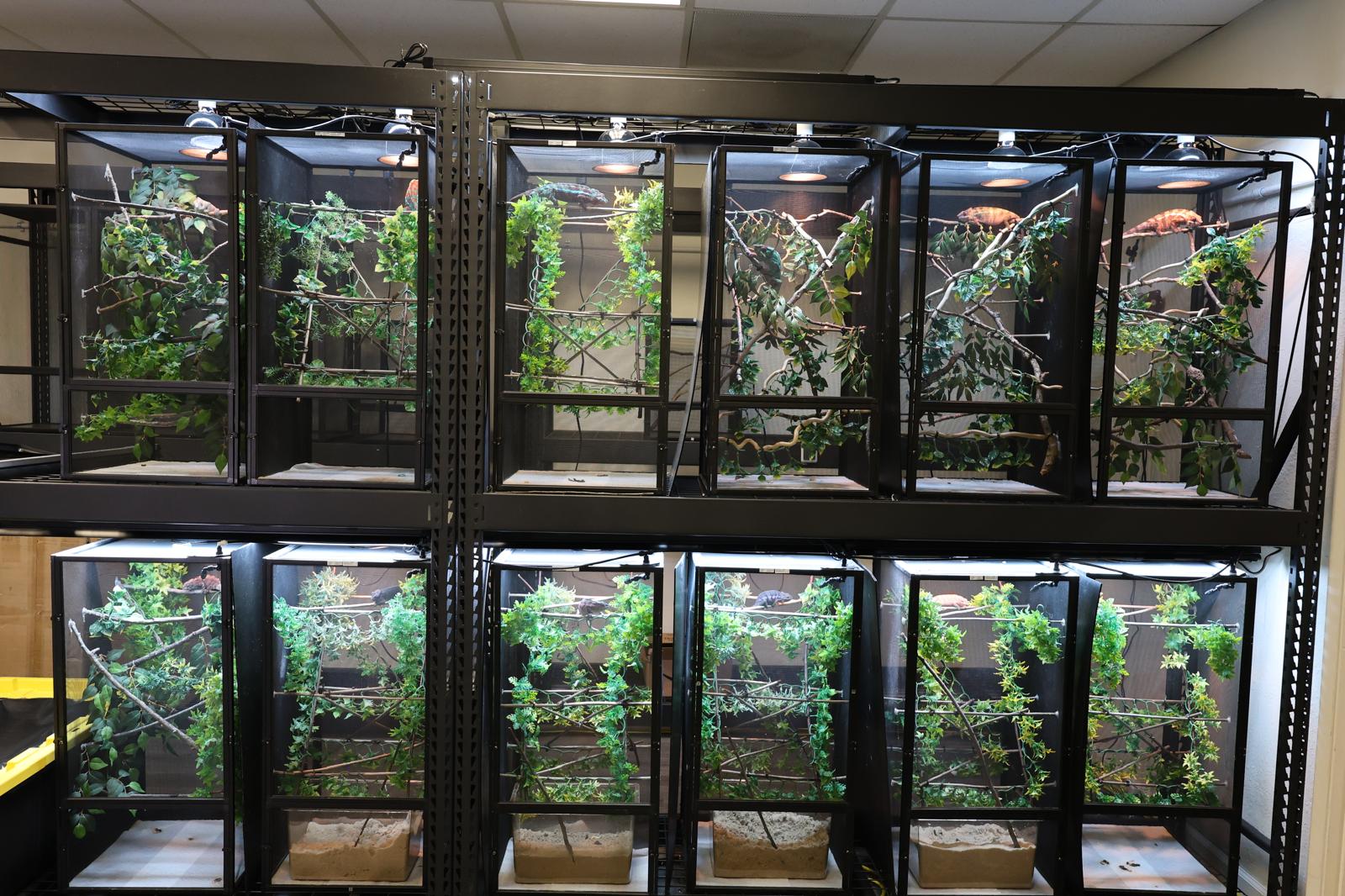
Wild-caught insects are tempting because they are free and arguably more 'natural.' They are also a one-shot vector for several serious problems: residual pesticide from your own or a neighbor's yard, intestinal parasites (especially in slugs and earthworms), and pathogens captive-bred chameleons have never built immunity to.
The marginal nutritional benefit is small. The downside risk is large. Stick to commercially-raised feeders from sellers who can document their colony's pesticide-free practices. The few extra dollars per month is the cheapest insurance you can buy for the animal.
DSQUARED Reptiles — Living Art. Curated Genetics.
From the field notes archive.
The morning baseline photograph.
A single weekly photo, taken at the same hour and angle, will tell you more about your care than any forum thread ever could.
Tightening screen tension on a year-old cage.
After twelve months of misting cycles and live plant weight, screen panels sag in ways that quietly compromise climbing surfaces.
A 72-hour gutload window for dubia roaches.
Dubia gutloads peak somewhere between 48 and 72 hours after the colony moves onto a fresh diet. Here's the schedule we run.