
What is missing from your cage right now? Add one perch this weekend that fixes that gap.
Add one novelty perch per month.
A new branch, vine, or angle every four weeks keeps the cage intellectually fresh without overwhelming the animal's territory map.
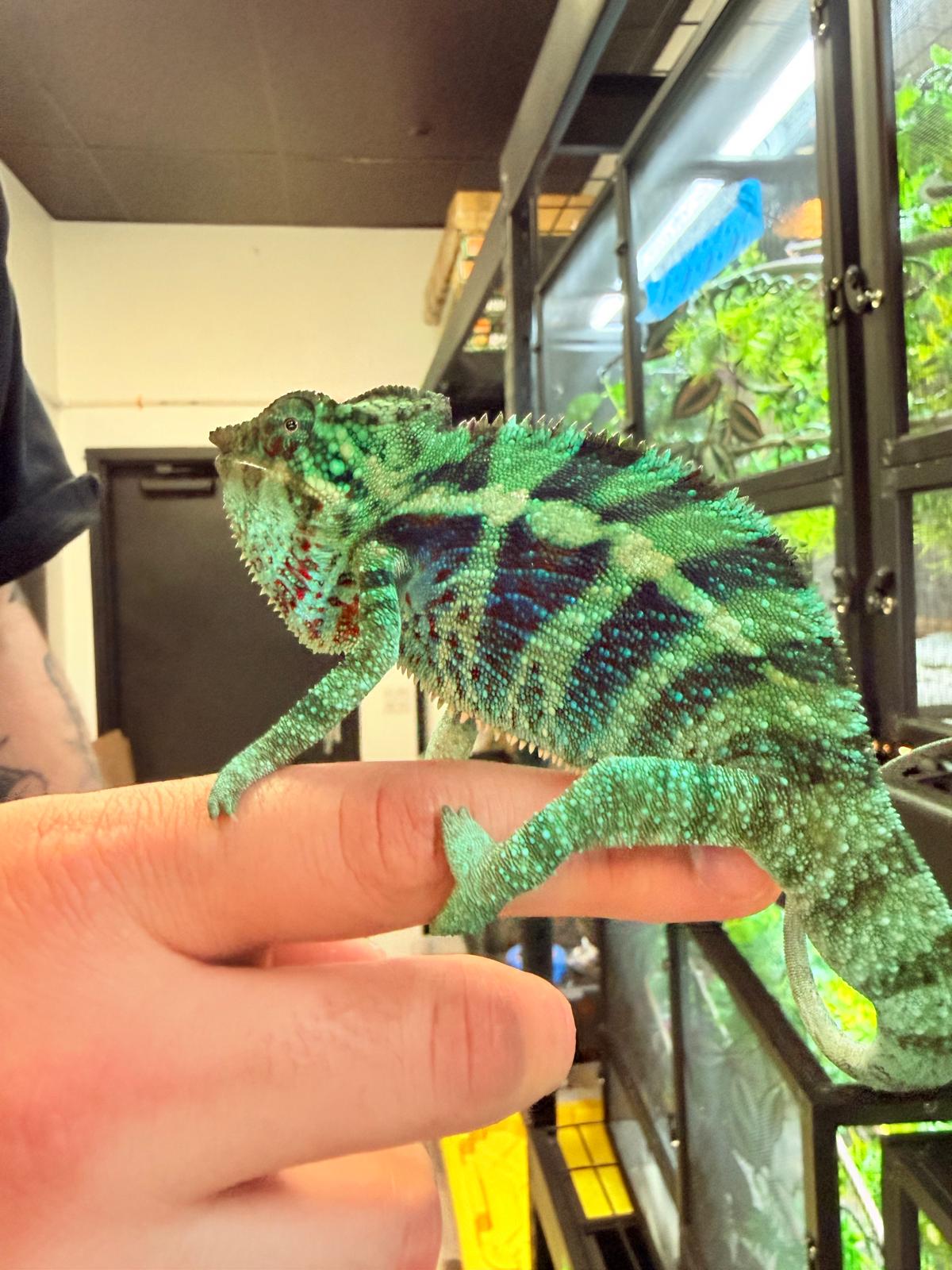
Chameleons are creatures of pattern but they also notice change. A single new perch added monthly — different texture, new angle, novel position — gets investigated within a day and incorporated into the climbing route within a week. More than one change at a time can stress the animal, so we rate-limit at one per month.
Pick the new perch deliberately: if your cage is heavy on horizontal, add a steep diagonal. If textures are all smooth, add bark. If the chameleon has been camping in one corner, add an attractive new perch in the opposite corner to draw it back into the full cage.
DSQUARED Reptiles — Living Art. Curated Genetics.
From the field notes archive.
The morning baseline photograph.
A single weekly photo, taken at the same hour and angle, will tell you more about your care than any forum thread ever could.
Tightening screen tension on a year-old cage.
After twelve months of misting cycles and live plant weight, screen panels sag in ways that quietly compromise climbing surfaces.
A 72-hour gutload window for dubia roaches.
Dubia gutloads peak somewhere between 48 and 72 hours after the colony moves onto a fresh diet. Here's the schedule we run.