
Place a probe thermometer in the cage tonight. Read it at 6am tomorrow. If the cage stayed above 70°F, plan a thermostat adjustment.
Overnight low temps are part of the care, not a bug.
Wild panthers experience a 12–18°F nightly drop. Captive cages held at constant 78°F miss a real biological cue.
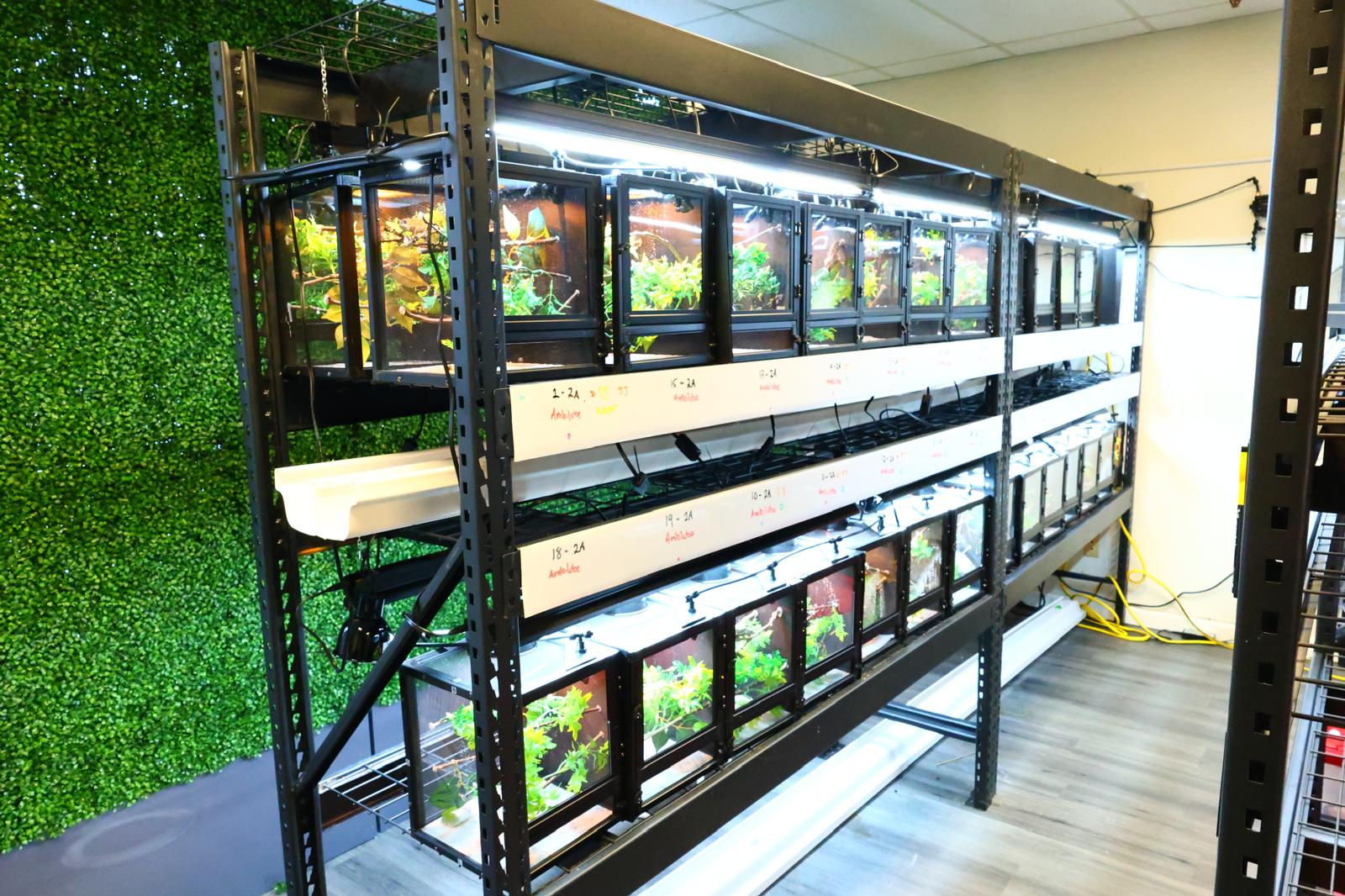
Modern climate-controlled houses keep the cage temperature flat, which is comfortable for humans and biologically incorrect for chameleons. In Madagascar, nightly lows in the 60s drive metabolic rest, immune function, and seasonal coloration cues. A panther held at constant 78°F never gets that signal.
Aim for an overnight low of 60–68°F in the cage. In most climate-controlled rooms this means dropping the room thermostat 4–8°F at lights-off. Some keepers achieve it with a smart plug on a small space heater that turns OFF at sunset. The drop should be gradual, never sudden, and the daytime basking gradient compensates for the lower base.
DSQUARED Reptiles — Living Art. Curated Genetics.
From the field notes archive.
The morning baseline photograph.
A single weekly photo, taken at the same hour and angle, will tell you more about your care than any forum thread ever could.
Tightening screen tension on a year-old cage.
After twelve months of misting cycles and live plant weight, screen panels sag in ways that quietly compromise climbing surfaces.
A 72-hour gutload window for dubia roaches.
Dubia gutloads peak somewhere between 48 and 72 hours after the colony moves onto a fresh diet. Here's the schedule we run.