
Run your fingers over your three primary perches. If two have the same texture, swap one out this month.
Perch texture variety prevents single-grip foot wear.
A cage with three identical perches trains identical foot patterns. Mix bark, smooth wood, and rough vine to build a foot that adapts.
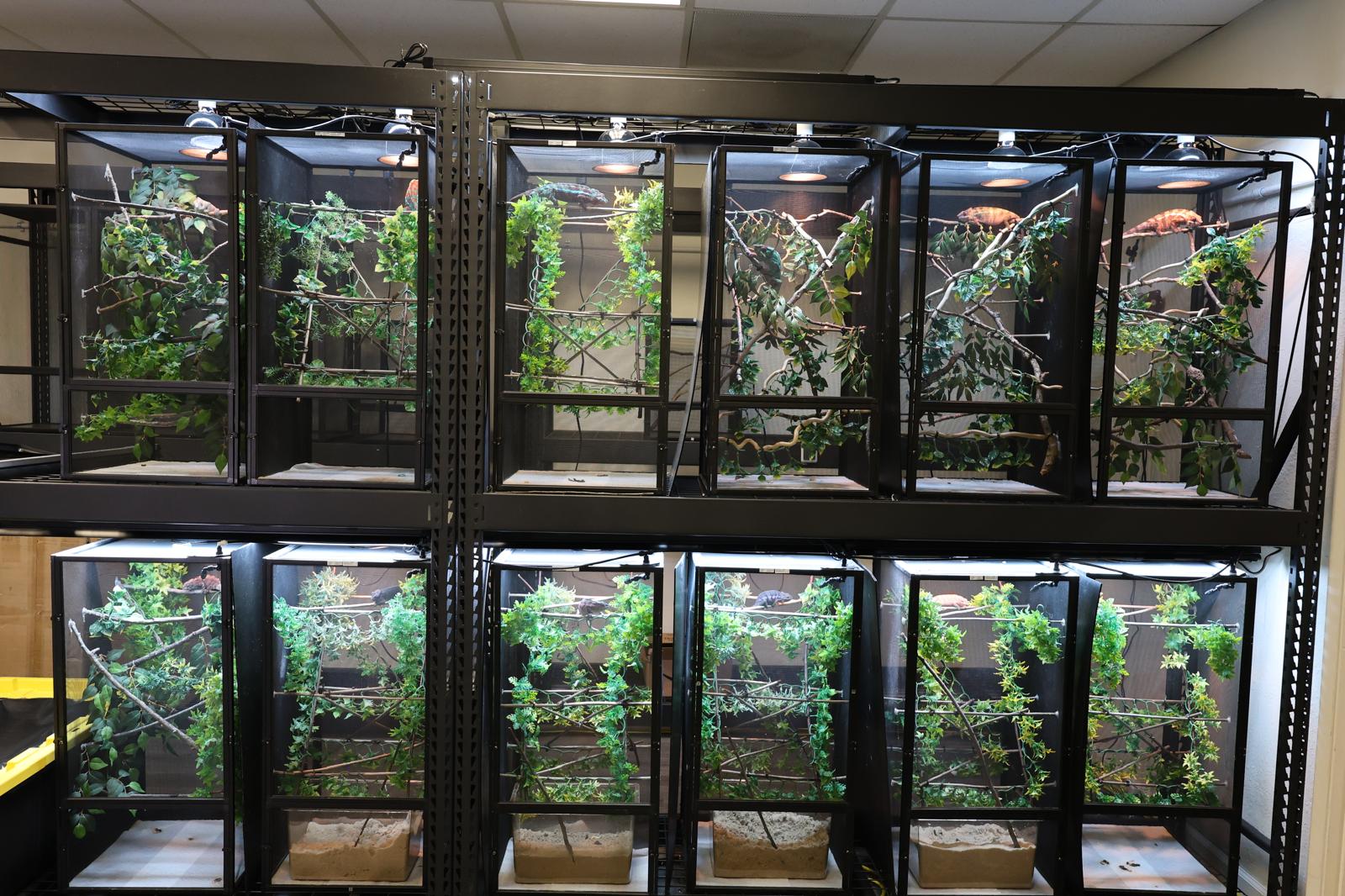
Foot tendons and pads adapt to the textures they grip most. A panther whose primary perches are all smooth manzanita develops grip strength tuned to that specific surface; transfer it to rough cork and you can see hesitation in the climb. Variety prevents this and keeps the chameleon's grip vocabulary broad.
We aim for three textures across the main climbing routes: rough bark (cork rounds), smooth seasoned wood (manzanita or grapevine), and irregular natural vine. Replace one of these every six months — old surfaces accumulate dust and lose texture, and a fresh perch is often the most-used perch within a week.
DSQUARED Reptiles — Living Art. Curated Genetics.
From the field notes archive.
The morning baseline photograph.
A single weekly photo, taken at the same hour and angle, will tell you more about your care than any forum thread ever could.
Tightening screen tension on a year-old cage.
After twelve months of misting cycles and live plant weight, screen panels sag in ways that quietly compromise climbing surfaces.
A 72-hour gutload window for dubia roaches.
Dubia gutloads peak somewhere between 48 and 72 hours after the colony moves onto a fresh diet. Here's the schedule we run.