
Listen to your animal first thing in the morning today. If you hear any clicks, write it down with the date.
Catching respiratory infection in its first 48 hours.
Open-mouth breathing, audible clicks, mucus at the nostrils, gular pumping. Any one of these warrants a vet call within the week.
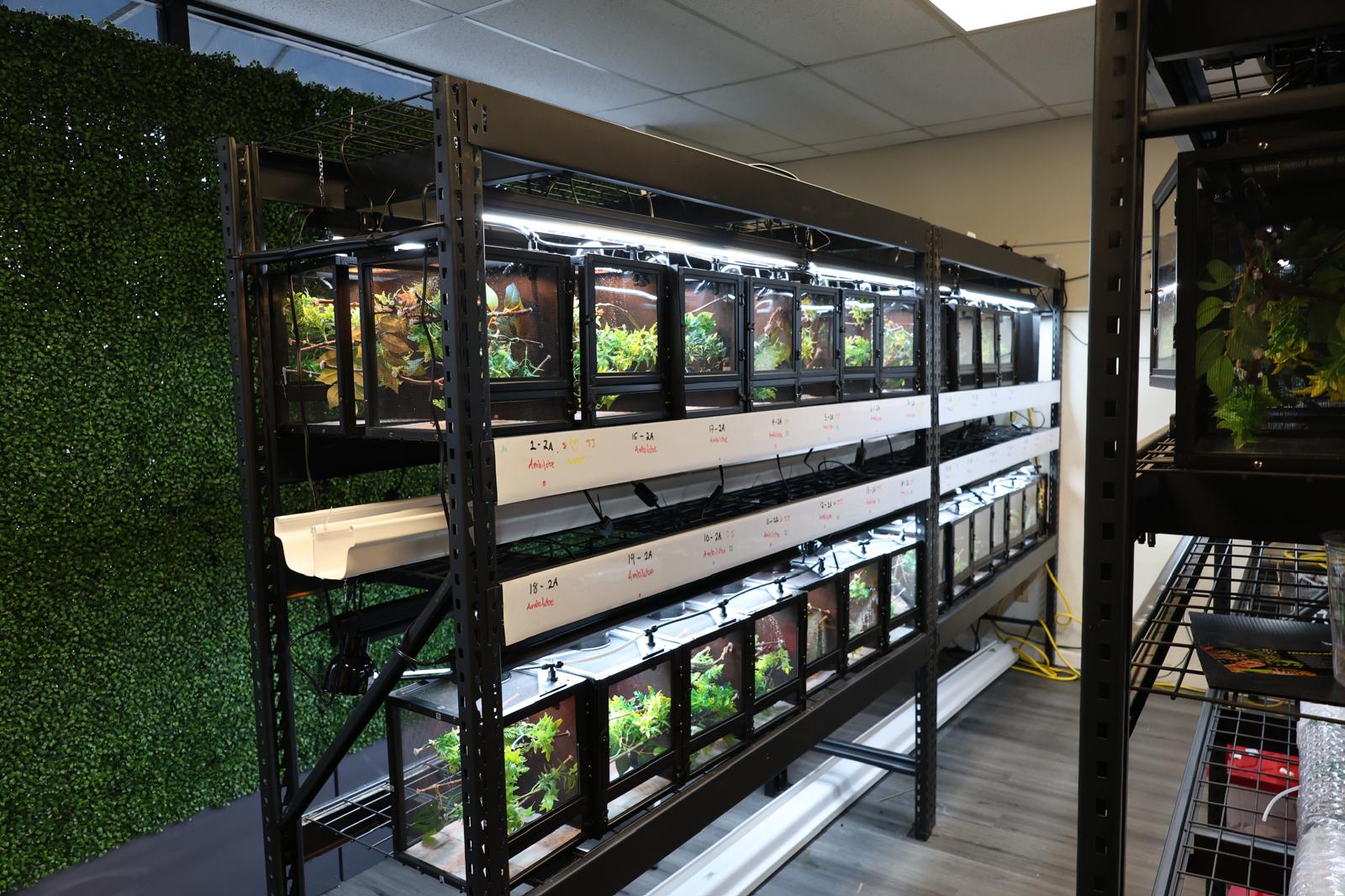
Respiratory infections progress fast in chameleons. The early signs are subtle: brief open-mouth breathing during the first morning warm-up, a faint clicking sound when the animal is at rest, slight mucus at the nostrils, or gular pumping (rhythmic throat movement). One of these alone might be a transient irritation; two of them is a vet call.
Causes are usually environmental: cool overnight temps below 60°F sustained for too long, cage humidity stuck above 90% without daytime drying, or a fogger pointed wrong (running while the animal is on the basking branch). Environmental fixes alone do not cure an active infection — those are vet territory — but they often prevent the next one.
DSQUARED Reptiles — Living Art. Curated Genetics.
From the field notes archive.
The morning baseline photograph.
A single weekly photo, taken at the same hour and angle, will tell you more about your care than any forum thread ever could.
Tightening screen tension on a year-old cage.
After twelve months of misting cycles and live plant weight, screen panels sag in ways that quietly compromise climbing surfaces.
A 72-hour gutload window for dubia roaches.
Dubia gutloads peak somewhere between 48 and 72 hours after the colony moves onto a fresh diet. Here's the schedule we run.