
Find your current UVB bulb. Read the install date written on the endcap. If older than ten months, order a replacement today.
Bulb-replacement week — calendar, not visual.
T5 HO UVB bulbs lose UVB output gradually. The visible light stays the same. Replace at twelve months on the calendar, not by eye.
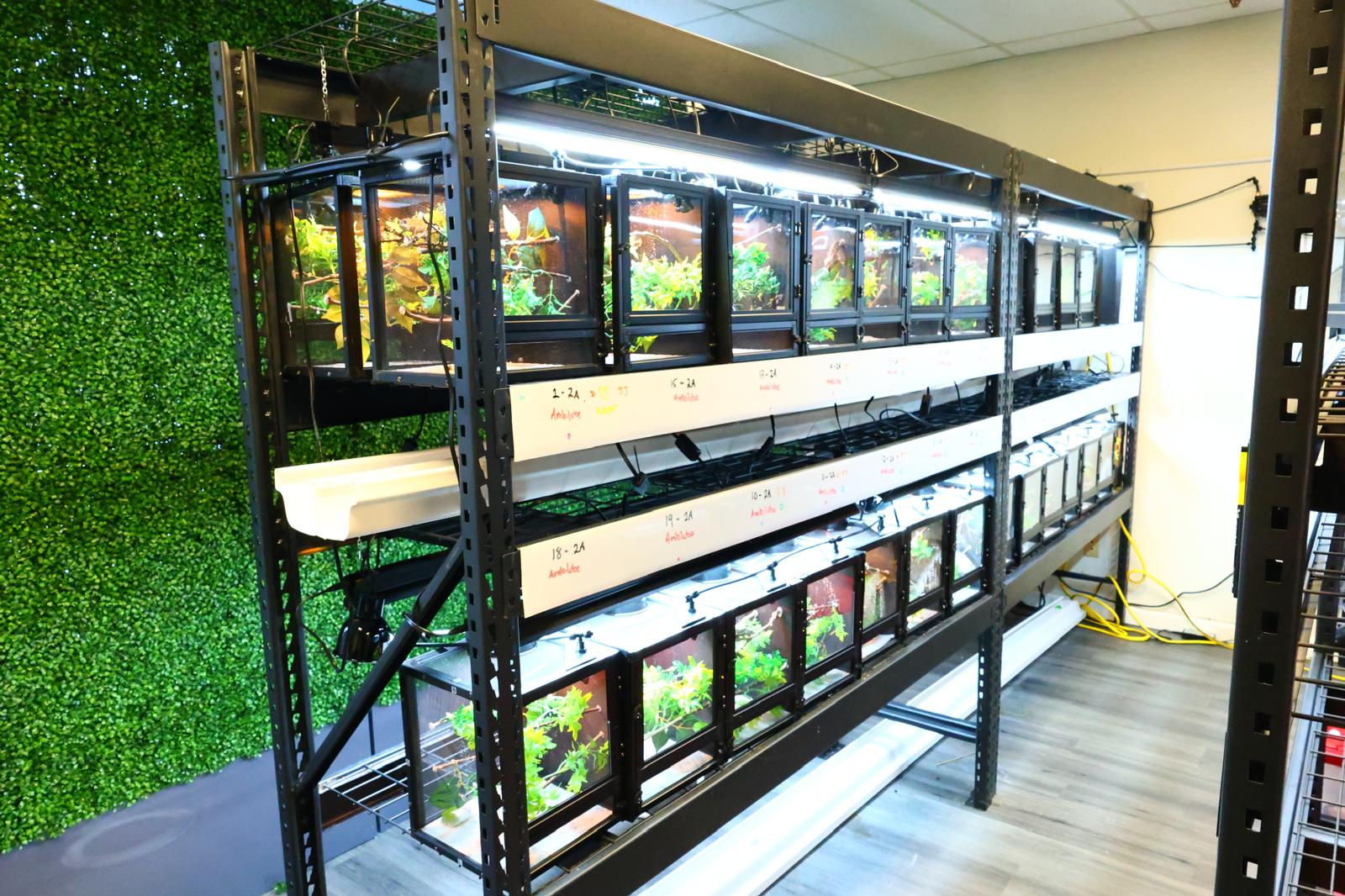
We replace UVB bulbs every twelve months regardless of how they look. Output decay is invisible: by month sixteen, a bulb that still glows brightly may produce 40% of its rated UVI. The animal does not show problems immediately, but the cumulative effect over a season is meaningful — softer casque development, slower growth, weaker grip.
Bulb-replacement week is also when we re-measure UVI at all three perch levels with the Solarmeter. Document the new bulb's date in pencil on the metal endcap. Save the receipt; the cost is meaningful enough to track and the timing helps with annual planning.
DSQUARED Reptiles — Living Art. Curated Genetics.
From the field notes archive.
The morning baseline photograph.
A single weekly photo, taken at the same hour and angle, will tell you more about your care than any forum thread ever could.
Tightening screen tension on a year-old cage.
After twelve months of misting cycles and live plant weight, screen panels sag in ways that quietly compromise climbing surfaces.
A 72-hour gutload window for dubia roaches.
Dubia gutloads peak somewhere between 48 and 72 hours after the colony moves onto a fresh diet. Here's the schedule we run.