
If you have a new arrival mid-quarantine, set a phone reminder for the day-14 fecal sample collection.
Quarantine week one — observation, no introductions.
A new arrival shares no air, no equipment, and no keeper sequence with the existing collection for sixty days. Week one is the strictest.
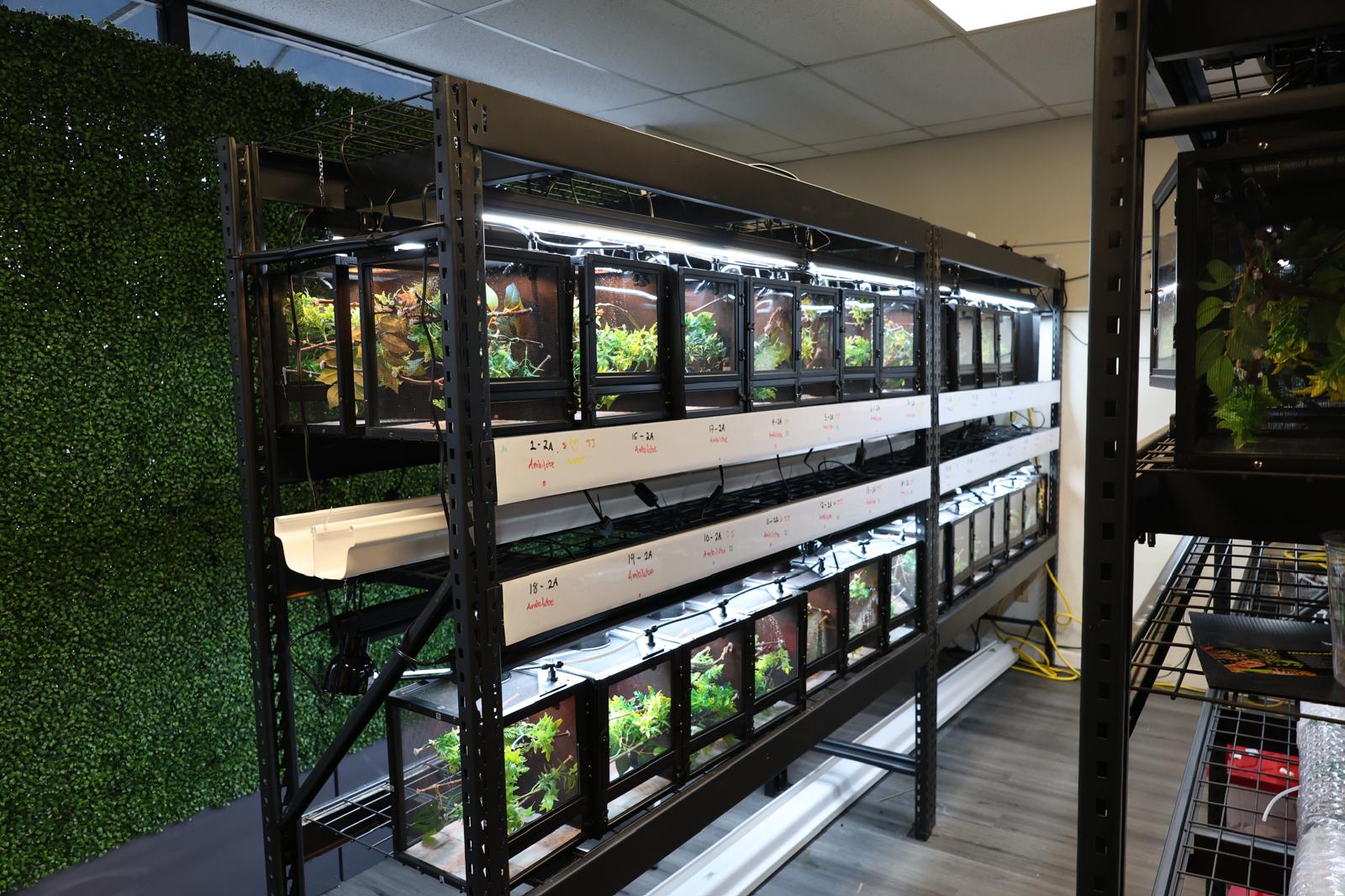
Quarantine is mostly about not doing things. The new animal lives in a separate cage in a separate room when possible, with dedicated tools (tweezers, mister bottle, drainage tray). Existing animals are handled and serviced first; the new animal is the last stop of the day, full stop.
Week one: minimal handling, no photographs from inside the cage, single light source, and a shorter feeding schedule to reduce stress. Take a stool sample on day three or four for the vet's fecal screen. Do not stress about color, weight loss, or appetite this week — calibration takes time.
DSQUARED Reptiles — Living Art. Curated Genetics.
From the field notes archive.
The morning baseline photograph.
A single weekly photo, taken at the same hour and angle, will tell you more about your care than any forum thread ever could.
Tightening screen tension on a year-old cage.
After twelve months of misting cycles and live plant weight, screen panels sag in ways that quietly compromise climbing surfaces.
A 72-hour gutload window for dubia roaches.
Dubia gutloads peak somewhere between 48 and 72 hours after the colony moves onto a fresh diet. Here's the schedule we run.