
Set a weekly Saturday-morning calendar reminder for your walk-around. Same time, same checks, every week.
The weekly walk-around inspection — three minutes, always.
Every Saturday morning, walk around every cage and inspect six things. The same six. The discipline catches problems weeks before symptoms.
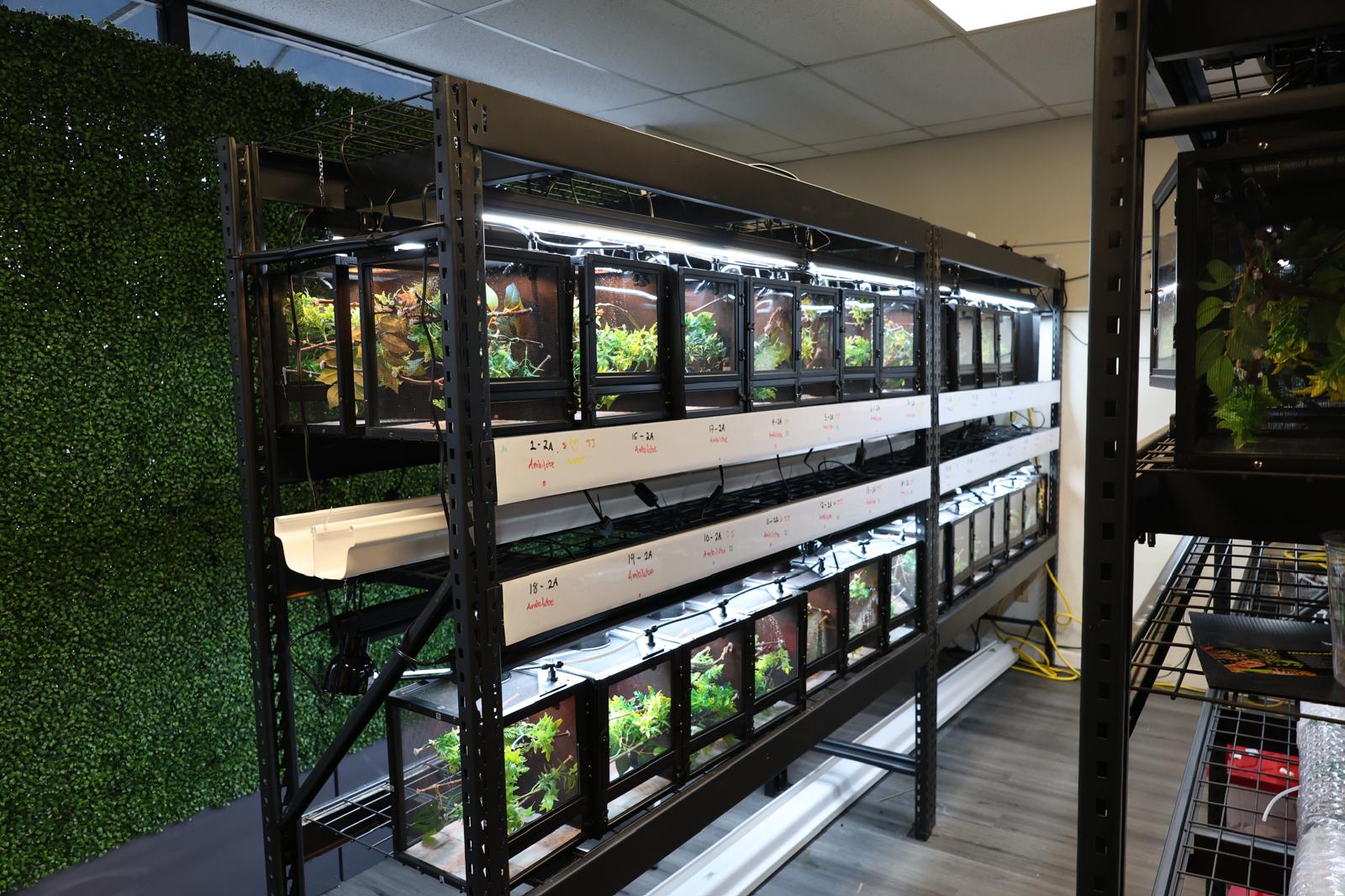
Once a week, every cage gets a three-minute external inspection. Six checks: (1) screen panel tension, (2) basking lamp operation and bulb cleanliness, (3) UVB bulb date and visible condition, (4) misting nozzle aim and drip rate, (5) drainage tray condition, (6) chameleon's basking position and color tone. Note anything that has drifted from baseline.
Three minutes per cage. Same checks every week. Patterns emerge: a screen panel slowly loosening, a misting nozzle drifting, a basking spot creeping warmer with the season. Catching them weekly costs nothing; catching them monthly costs an animal in health.
DSQUARED Reptiles — Living Art. Curated Genetics.
From the field notes archive.
The morning baseline photograph.
A single weekly photo, taken at the same hour and angle, will tell you more about your care than any forum thread ever could.
Tightening screen tension on a year-old cage.
After twelve months of misting cycles and live plant weight, screen panels sag in ways that quietly compromise climbing surfaces.
A 72-hour gutload window for dubia roaches.
Dubia gutloads peak somewhere between 48 and 72 hours after the colony moves onto a fresh diet. Here's the schedule we run.