
Walk to your enclosure. Count vertical climbing routes (60° or steeper). If fewer than three, add one this weekend.
Vertical climbing diversity matters more than horizontal coverage.
A panther's wild day is mostly vertical movement. Cage interiors that go heavy on horizontal perches under-train the animal's primary motion pattern.
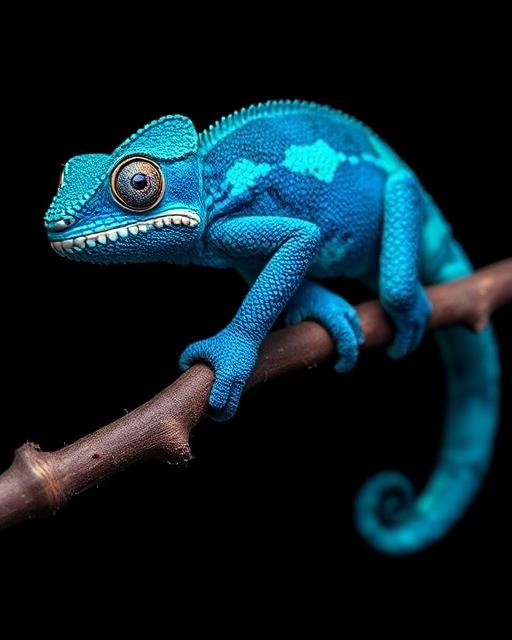
Watch a chameleon in the wild and you see vertical movement: ascending the basking branch in the morning, dropping down through canopy mid-day, climbing back to a chosen sleeping perch at dusk. Cage layouts that prioritize horizontal perches (because they look tidier) under-train this primary motion pattern and produce animals with weaker vertical grip strength.
We aim for at least three vertical or near-vertical climbing routes in every adult cage — bark sections leaning against the back wall, vines spiraling up to the canopy, branches placed at 60–80° rather than 0°. The tidier alternative is comfortable for the keeper but boring for the animal.
DSQUARED Reptiles — Living Art. Curated Genetics.
From the field notes archive.
The morning baseline photograph.
A single weekly photo, taken at the same hour and angle, will tell you more about your care than any forum thread ever could.
Tightening screen tension on a year-old cage.
After twelve months of misting cycles and live plant weight, screen panels sag in ways that quietly compromise climbing surfaces.
A 72-hour gutload window for dubia roaches.
Dubia gutloads peak somewhere between 48 and 72 hours after the colony moves onto a fresh diet. Here's the schedule we run.