Pull a separate feeder bin tonight. Move thirty adult dubia onto leafy greens and bee pollen. Feed in 72 hours.
A 72-hour gutload window for dubia roaches.
Dubia gutloads peak somewhere between 48 and 72 hours after the colony moves onto a fresh diet. Here's the schedule we run.
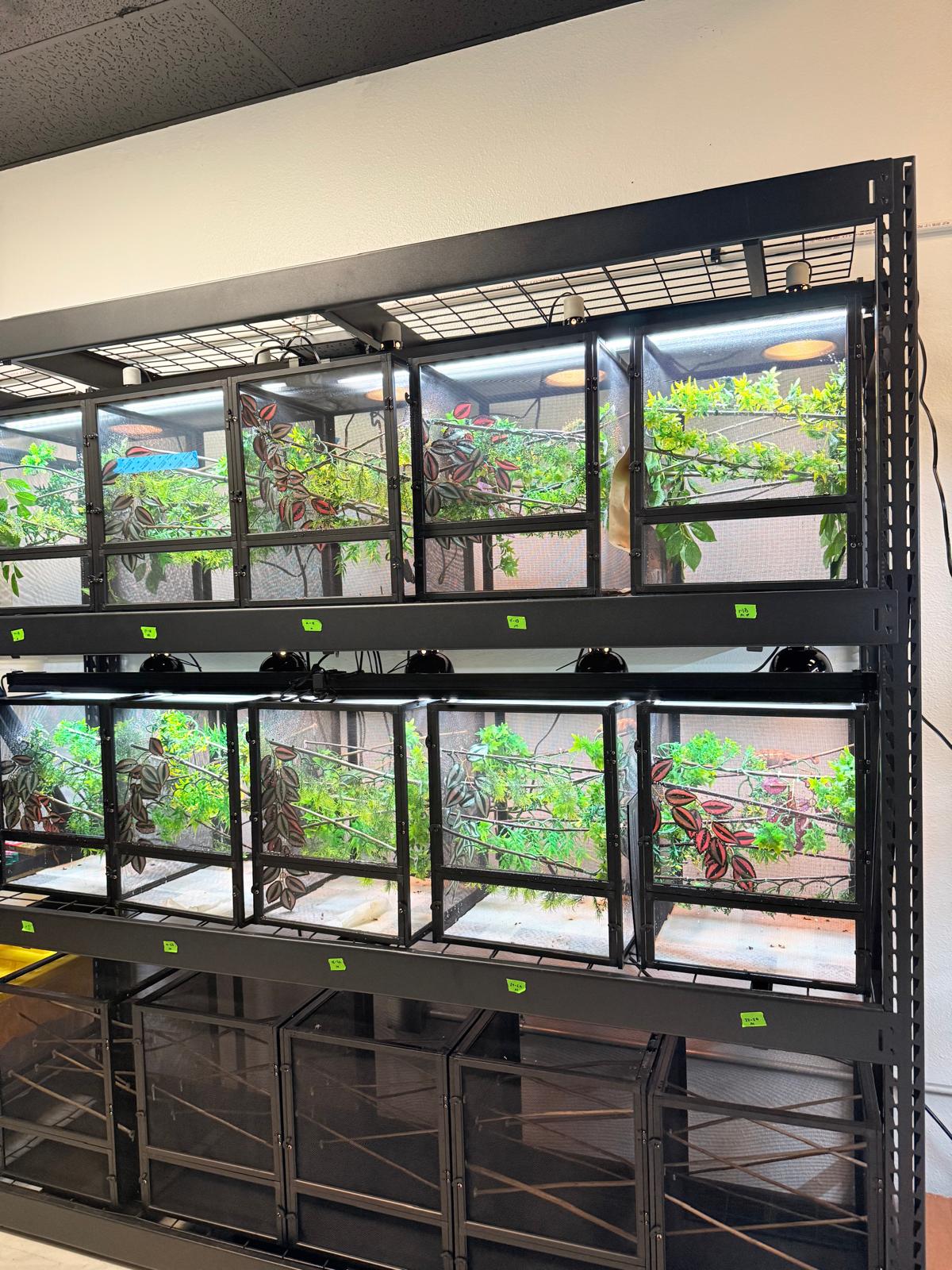
Treating the colony bin as the gutload site is the most common mistake in roach husbandry. The colony bin is optimized for breeding, not for the nutritional density you want delivered into the chameleon. Breeding colonies do best on a high-protein chow; chameleons should not be eating high-protein gutload at every meal.
We move feeders out of the breeding colony into a smaller offload bin three days before they are scheduled to be fed. Greens, root vegetables, and a small spoon of bee pollen. Continuous feeding for seventy-two hours.
Why seventy-two hours: dubia have slow gut transit. A meal eaten today is fully integrated by 48 hours, and the gut itself remains rich in undigested plant matter at 72 hours. Feed earlier and the nutrition is still moving through; feed later and the roaches start dehydrating.
DSQUARED Reptiles — Living Art. Curated Genetics.
From the field notes archive.
Why calcium without D3 carries the daily load.
Five days a week we dust with calcium-only. The D3 version comes Wednesday. The multivitamin comes Friday. Here is why the rotation is staggered.
Feeder rotation: crickets, roaches, BSF larvae.
A single-feeder diet is a nutritional gradient that flattens. Three rotated feeders give you slope and recoverability when one source goes offline.
Fasting protocols for adult panthers.
Adults benefit from a structured fast. Two days a week without feeders, hydration unchanged. Resets the gut and prevents the slow obesity creep most adults trend toward.