If you keep breeding records, pull last year's pair sheet today. If lineage longevity is missing from any entry, add it from your weight log.
How we choose a breeding pair.
Locale match first. Health second. Coloration third. Disposition fourth. Reverse the order and you produce visually striking animals with shorter careers.
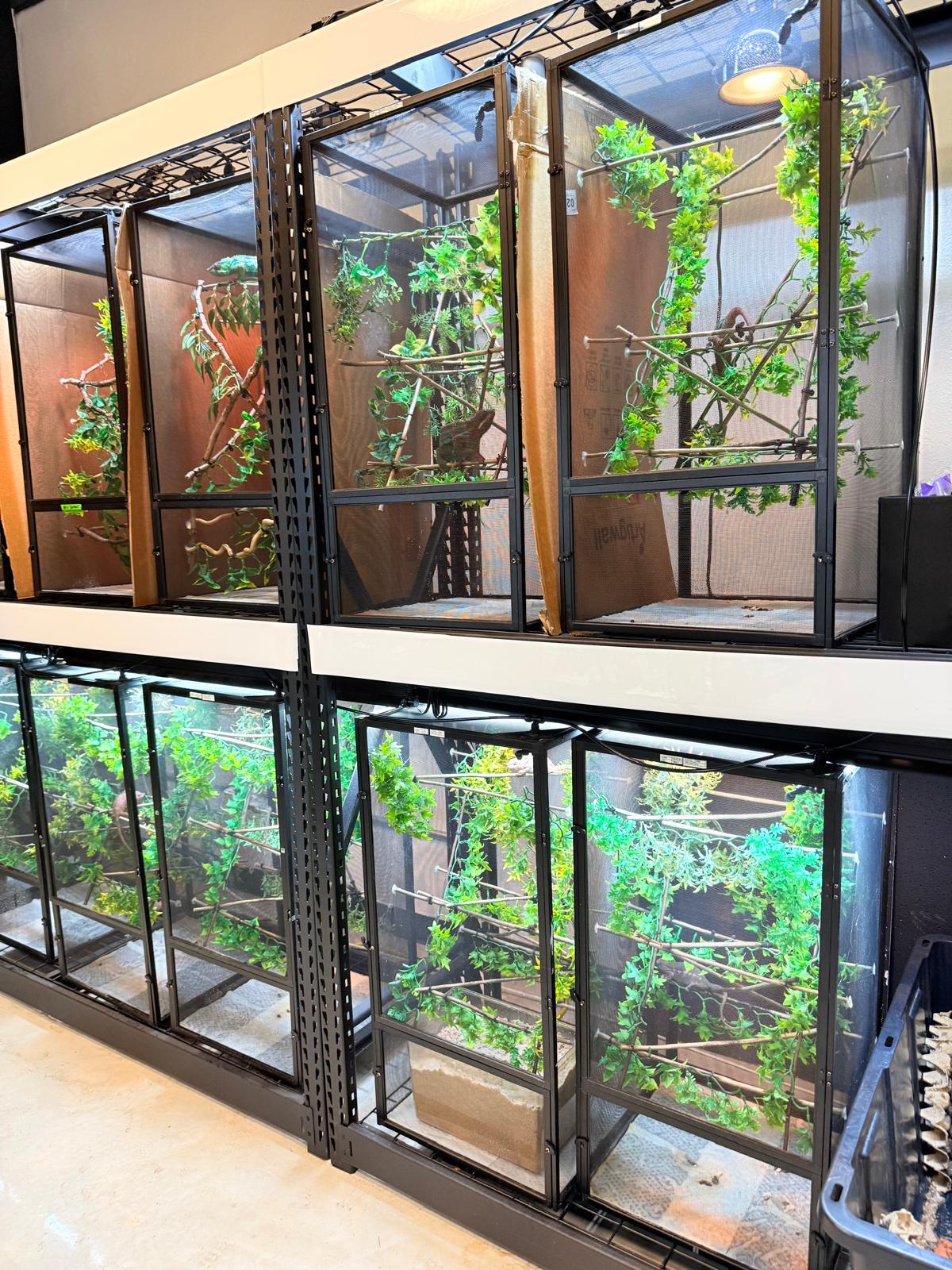
We will not pair across locales. Within locale, we look for proven longevity in the parents — animals over four years old, weight stable, clean veterinary record. Coloration is the last filter applied, not the first one. A male with extraordinary color and an early metabolic crash is not a breeder we want.
Disposition matters because temperament is heritable in subtle ways. A pair with calm handling tolerance produces juveniles that calibrate to keepers faster, which translates to lower stress in the new home and longer working lives.
DSQUARED Reptiles — Living Art. Curated Genetics.
From the field notes archive.
The blue-bar question belongs to the lineage, not the photograph.
A blue lateral bar is the most photographed and most misunderstood trait in Ambilobe lineage. The trait sits in pedigree, not in any single image.
Color development month by month.
A panther male earns his color across nine months. A keeper who knows the order of operations is not surprised by what shows up at month five.
The week's schedule. May 10 → 16.
Every Sunday issue lays out the full seven days at the bench: what gets fed, what gets dusted, what gets adjusted. Print this and put it on the fridge.