Photograph your juvenile from the side this week and write the projected adult coloration on the photo. Compare in 90 days.
Color development month by month.
A panther male earns his color across nine months. A keeper who knows the order of operations is not surprised by what shows up at month five.
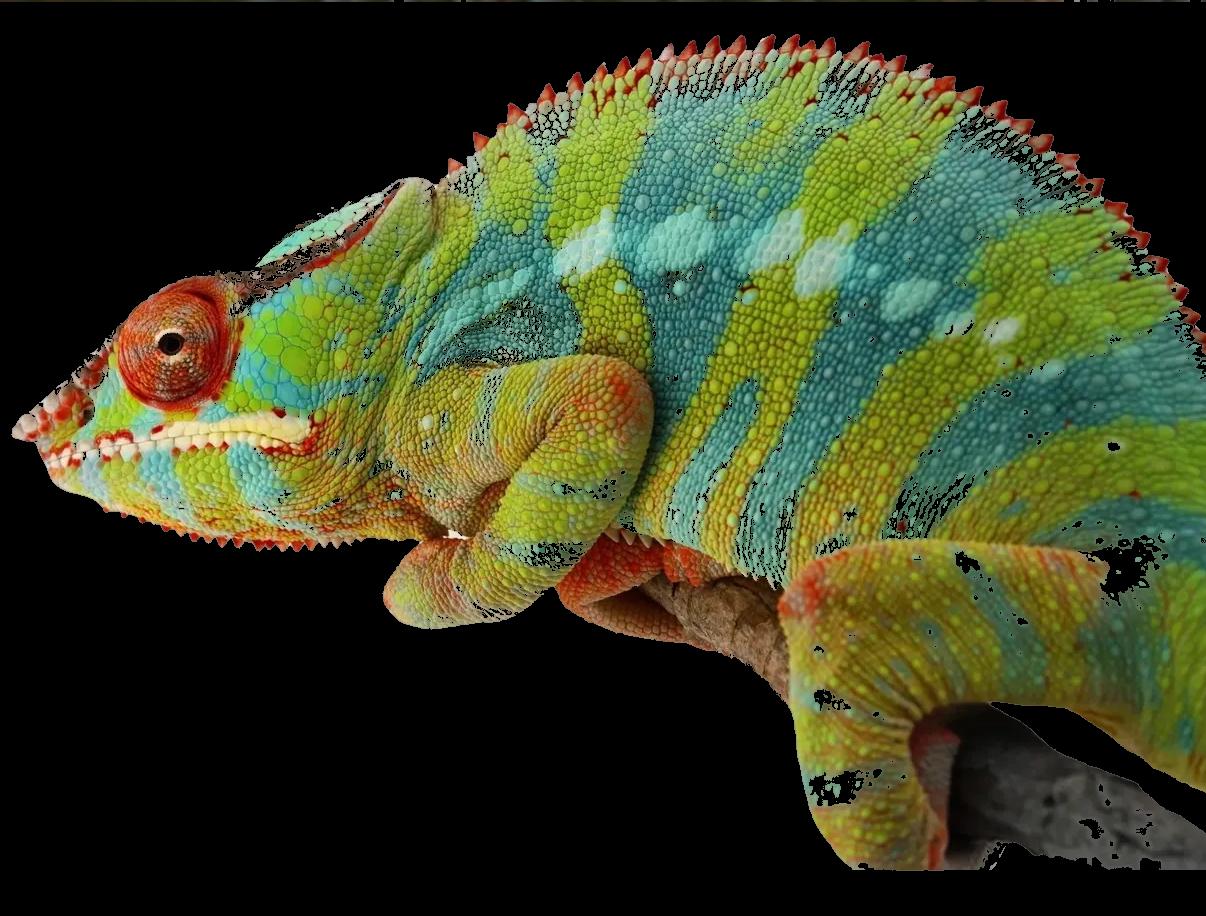
Bars sharpen first, between months three and four. Lateral body tone follows at five to six. Casque saturation arrives at seven. Rostral process color, when present, fills in at eight to nine. Temporal vermiculation continues to deepen for another year past that.
If you bought a juvenile expecting a specific adult coloration, the early months will not show you what you bought. The lineage shows you what you bought. The animal grows into it on its own clock. Patience is a husbandry skill.
DSQUARED Reptiles — Living Art. Curated Genetics.
From the field notes archive.
The blue-bar question belongs to the lineage, not the photograph.
A blue lateral bar is the most photographed and most misunderstood trait in Ambilobe lineage. The trait sits in pedigree, not in any single image.
How we choose a breeding pair.
Locale match first. Health second. Coloration third. Disposition fourth. Reverse the order and you produce visually striking animals with shorter careers.
The week's schedule. May 10 → 16.
Every Sunday issue lays out the full seven days at the bench: what gets fed, what gets dusted, what gets adjusted. Print this and put it on the fridge.