At today's feeding, count how many feeders the animal accepts versus refuses. If refusal rate is under 20 percent, scale the next feeding down.
Reading hunger versus satiety in juveniles.
A juvenile that turns away from a feeder is not a juvenile in trouble. A juvenile that hits every feeder offered is not a juvenile thriving.
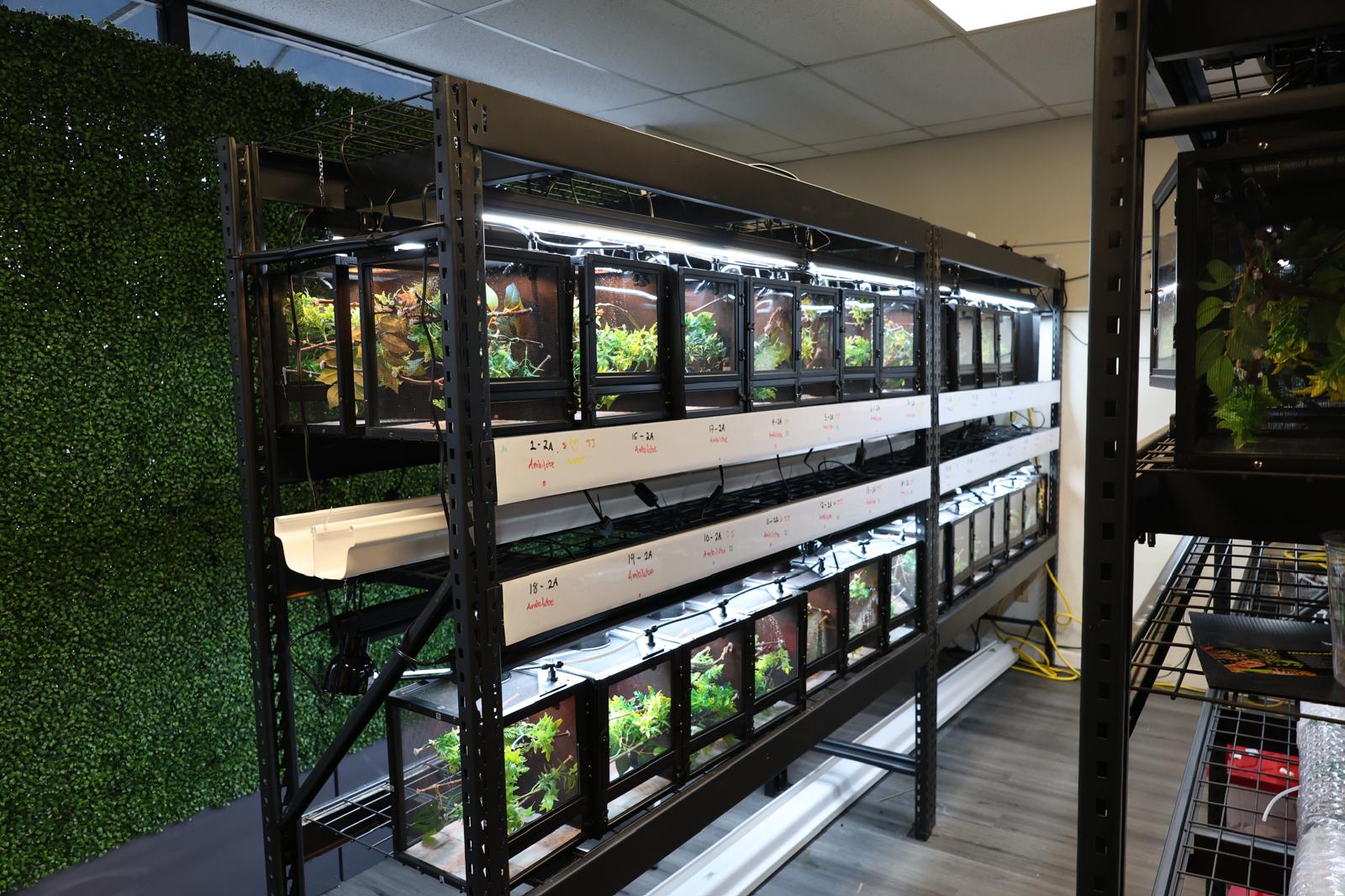
Hunger in a juvenile panther reads as forward orientation, eye lock, slow tongue extension to test distance, and a strike inside three seconds of presentation. Satiety reads as a glance, then a turn-away, sometimes a small color shift, and a movement to a different perch.
We feed juveniles to roughly seventy percent of their visible appetite. The remaining thirty percent is the buffer that prevents obesity, supports clean shedding, and keeps the animal motivated to track novel feeders. A juvenile that eats every feeder presented is being overfed, not properly fed.
DSQUARED Reptiles — Living Art. Curated Genetics.
From the field notes archive.
Your first thirty days, without fuss.
An acclimation protocol for a new keeper. Less is more in the first month — let the animal find its routine.
The 24x24x48 screen cage is the right first enclosure.
Glass aquariums fail. Hybrid PVC builds need more skill than a beginner has. The middle path is the right first cage for almost every new keeper.
Quarantine protocol for new arrivals.
A new arrival shares no air, no equipment, and no keeper-handling sequence with the existing collection for sixty days. No exceptions.