If you have a new animal under thirty days, leave it alone today. No handling. Photograph from outside, log weight tomorrow morning.
Your first thirty days, without fuss.
An acclimation protocol for a new keeper. Less is more in the first month — let the animal find its routine.
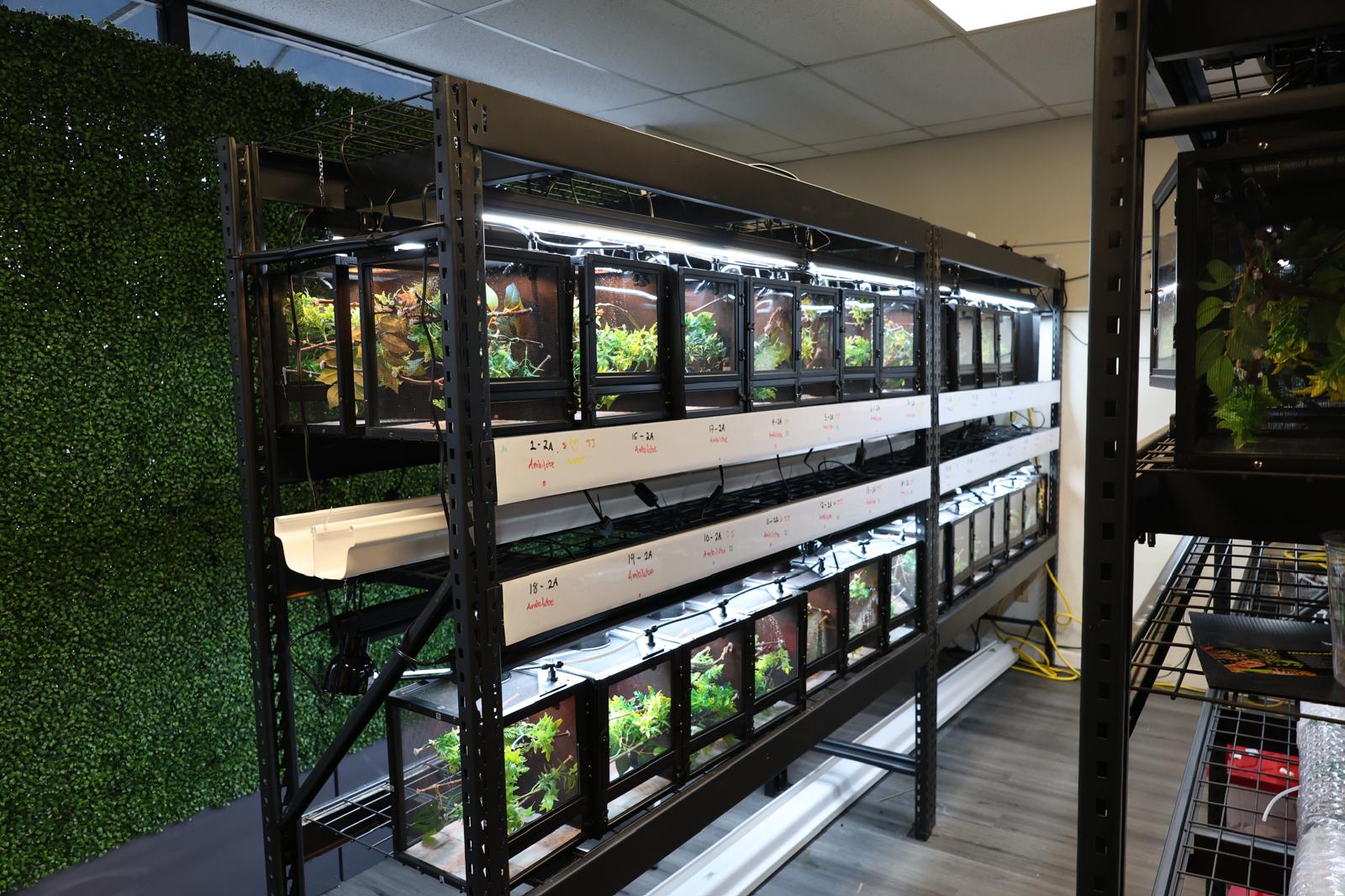
The first thirty days with a new chameleon are mostly about you not interfering. The animal needs to map the cage, find the basking spot, learn where water arrives, identify the feeder cup. Every novel interaction adds stress.
Days 1–7: no handling, minimal cage entry, mist on the standard schedule, drop crickets in the feeder cup once daily. Photograph the animal from outside the enclosure once per day, same time, same angle.
Days 8–14: continue. Add a once-weekly multivitamin to the dust rotation. By day ten you should see consistent basking behavior in the morning and a known drinking spot.
Days 15–30: introduce slow-moving hand presence at cage entry — door open, hand still, no reaching. Most animals will eventually walk onto an offered perch by week four. Most. Not all. Force nothing.
DSQUARED Reptiles — Living Art. Curated Genetics.
From the field notes archive.
The 24x24x48 screen cage is the right first enclosure.
Glass aquariums fail. Hybrid PVC builds need more skill than a beginner has. The middle path is the right first cage for almost every new keeper.
Reading hunger versus satiety in juveniles.
A juvenile that turns away from a feeder is not a juvenile in trouble. A juvenile that hits every feeder offered is not a juvenile thriving.
Quarantine protocol for new arrivals.
A new arrival shares no air, no equipment, and no keeper-handling sequence with the existing collection for sixty days. No exceptions.