Take this week's photo right now if you have not already. Same time, same light, same angle. Save with today's date in the filename.
Photographing your animal, the right way.
Most keeper photographs are unusable for tracking change because the lighting, distance, and angle vary every time. Standardize three things and the dataset becomes useful.
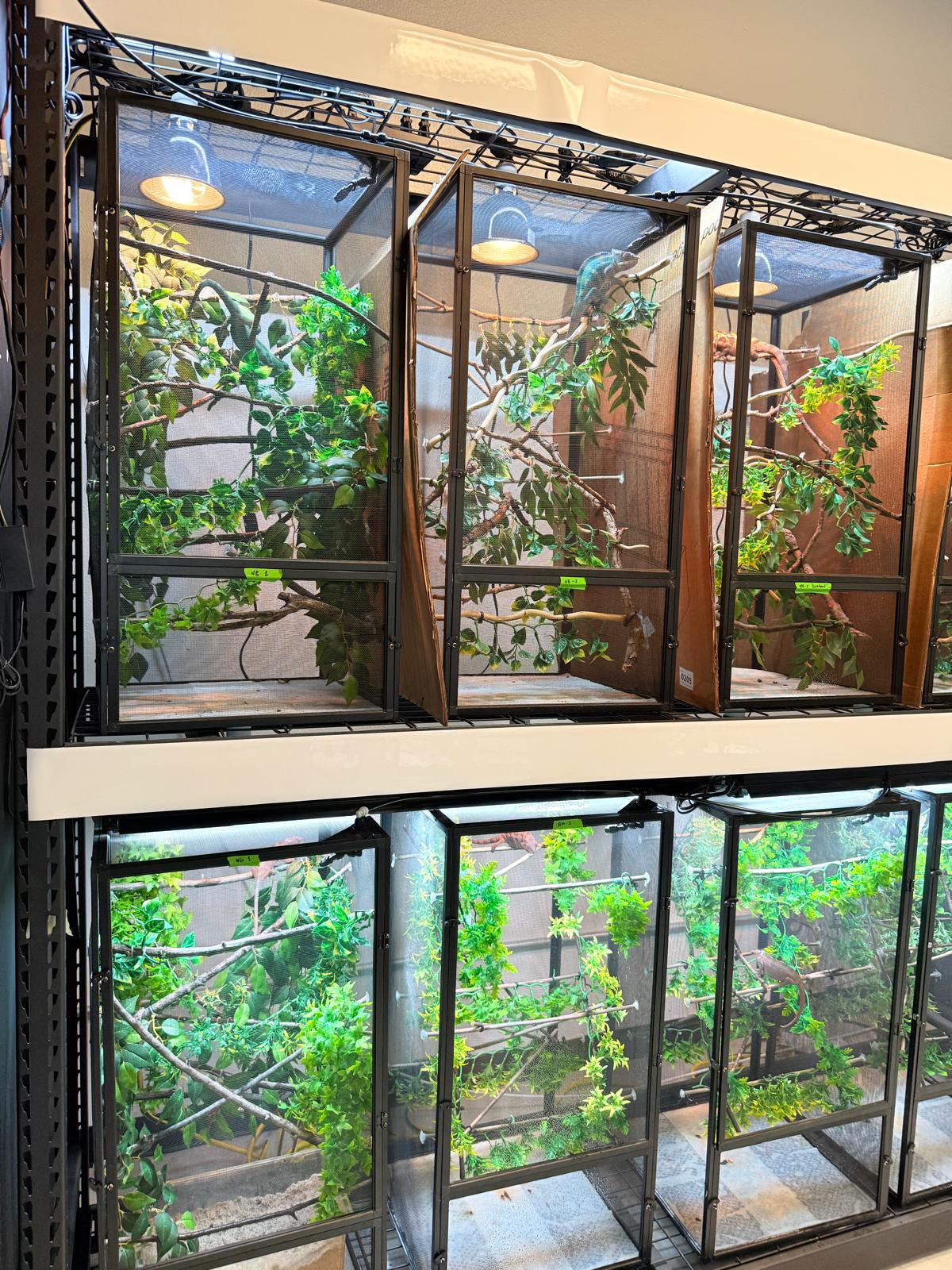
Same light source. A single window or a single overhead bulb, used consistently. Phone flash off — flash washes out the lateral bars that you are trying to track. Same distance from the cage. Same side of the animal — most keepers photograph from the right; pick one and stay with it.
A weekly photo, dated, archived in a single folder, is the most effective long-term husbandry tool a keeper has. After a year you can pull up month four and month sixteen side by side and see what the lineage actually produced.
DSQUARED Reptiles — Living Art. Curated Genetics.
From the field notes archive.
Your first thirty days, without fuss.
An acclimation protocol for a new keeper. Less is more in the first month — let the animal find its routine.
The 24x24x48 screen cage is the right first enclosure.
Glass aquariums fail. Hybrid PVC builds need more skill than a beginner has. The middle path is the right first cage for almost every new keeper.
Reading hunger versus satiety in juveniles.
A juvenile that turns away from a feeder is not a juvenile in trouble. A juvenile that hits every feeder offered is not a juvenile thriving.