Watch your animal in the first thirty minutes after lights-on tomorrow. If it is not basking with full body exposure, take a temperature reading at the basking branch.
Reading basking behavior across the day.
A panther's daily activity follows a predictable arc. Deviations from the arc are the earliest behavioral signal the keeper has access to.
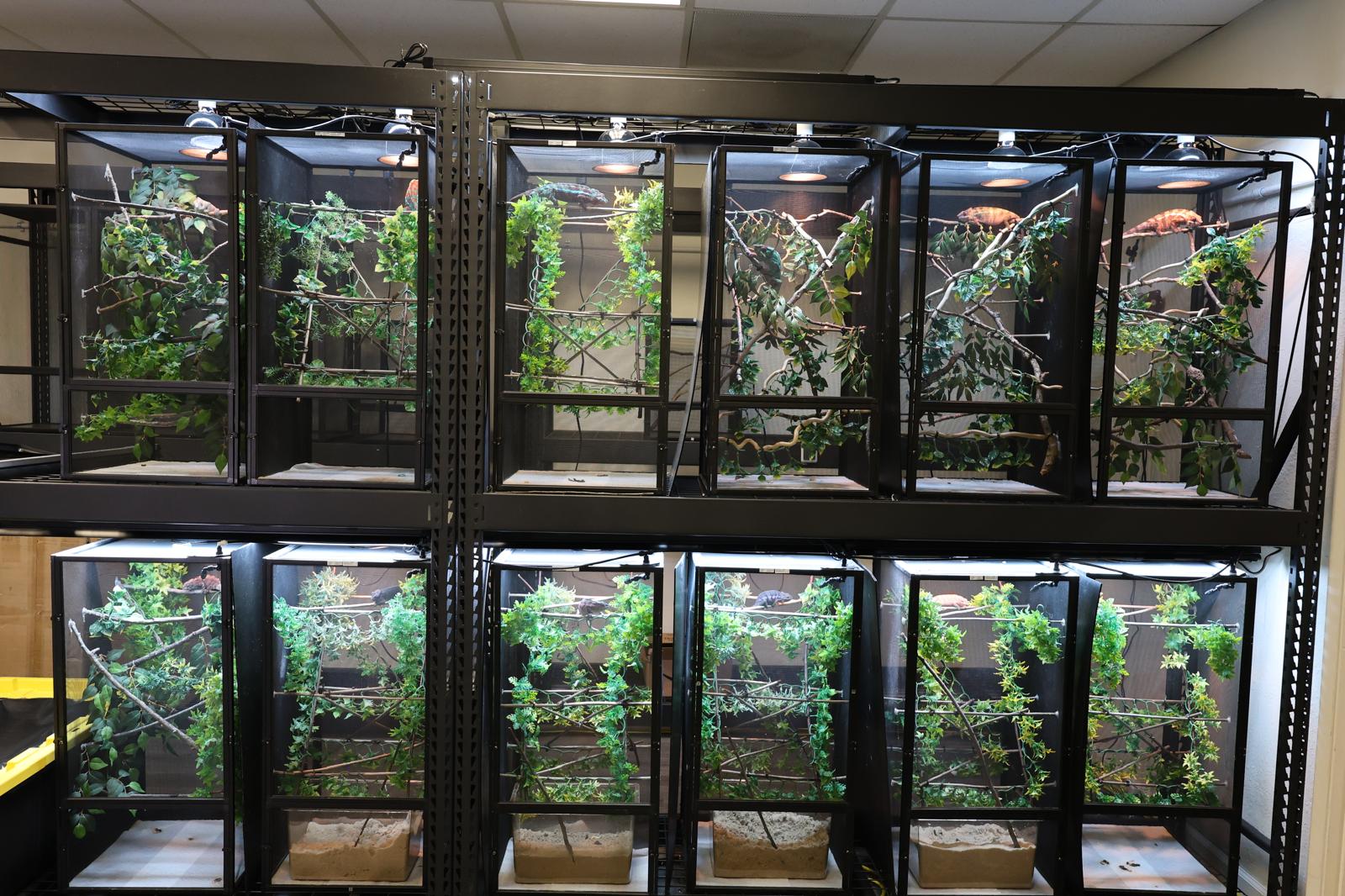
First hour after lights-on: long basking session under the lamp, full lateral body exposure to UVB, body color slightly subdued and flat. Mid-morning: shift to mid-canopy, brief drinking events at any leaves still wet from misting, active hunting if feeders are present.
Afternoon: lower two-thirds of the cage, alert but not actively hunting. Last hour before lights-out: re-positioning to a chosen sleeping perch, body color slightly paler than peak day color. A morning that does not include a sustained basking session is the most reliable behavioral early-warning we have.
DSQUARED Reptiles — Living Art. Curated Genetics.
From the field notes archive.
Rotate the basking branch eighteen degrees this week.
A static branch trains a static animal. A small angular shift, repeated through the season, builds grip strength and joint articulation.
Branch architecture: diagonals, not horizontals.
An enclosure full of horizontal perches trains a flat animal. The wild equivalent is a network of diagonals at every angle the foot can grip.
Branch diameter and grip development.
Grip strength develops on branches the foot has to negotiate. Too thin and the toes overlap; too thick and only the front toes bear weight.