Pick the branch your chameleon uses most. Loosen the mount, rotate it eighteen degrees, retighten. Note the original orientation in your log.
Rotate the basking branch eighteen degrees this week.
A static branch trains a static animal. A small angular shift, repeated through the season, builds grip strength and joint articulation.
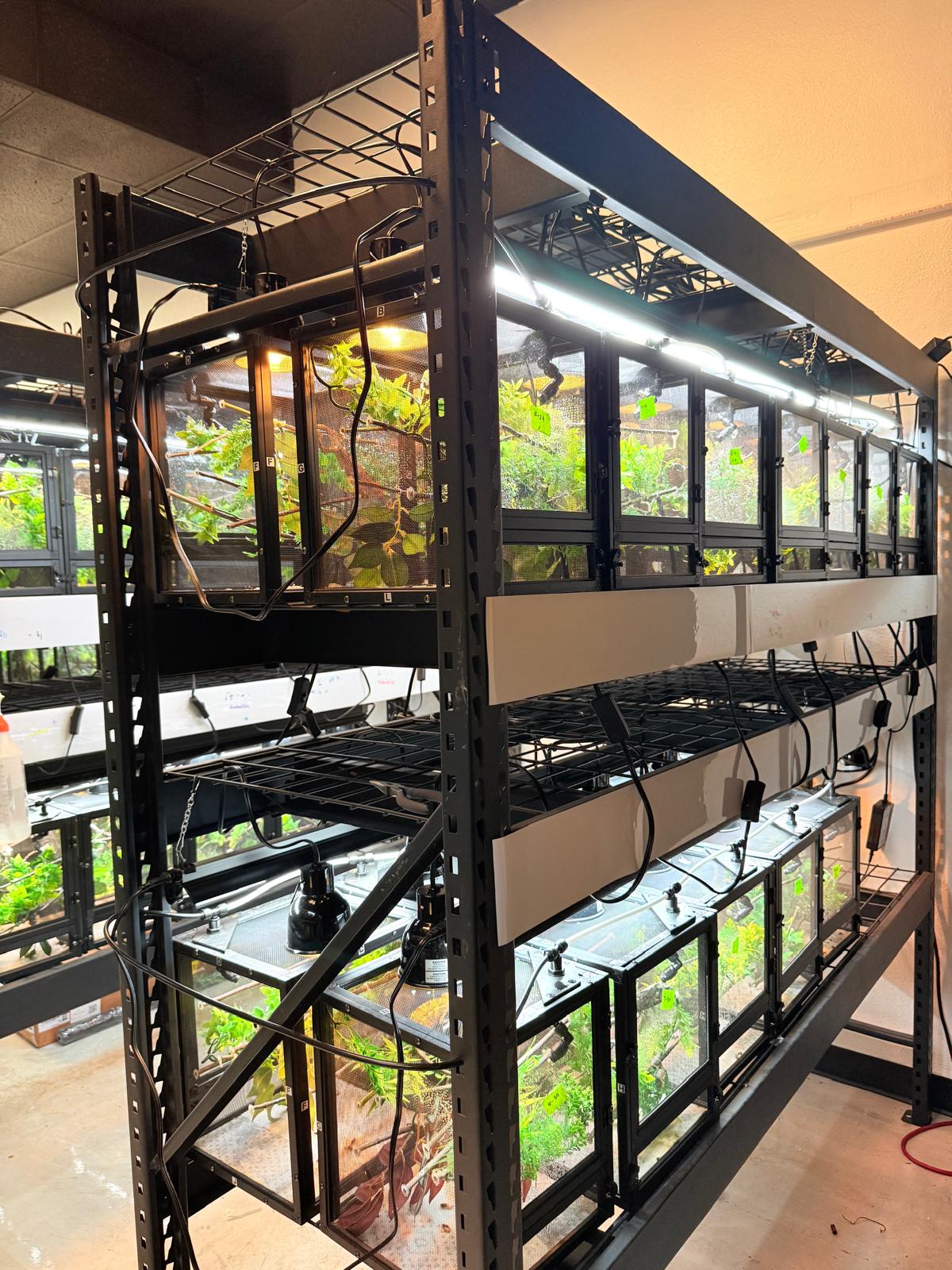
A panther spends most of its adult life on three branches. The same three branches are gripped at the same three angles, day after day, for the entire working life of the animal. The grip is strong but narrow. The joints articulate within a small envelope.
Eighteen degrees is small enough that the chameleon does not abandon the branch. Large enough that the foot has to negotiate a meaningfully different geometry. We rotate every two weeks. Over a year, twenty-six small rotations cover well over three hundred degrees of cumulative angular variation.
The rotation is around the branch's long axis, not around the trunk of the cage. Same wood, different face. Moving the perch entirely is a different kind of enrichment and we do that less often.
DSQUARED Reptiles — Living Art. Curated Genetics.
From the field notes archive.
Branch architecture: diagonals, not horizontals.
An enclosure full of horizontal perches trains a flat animal. The wild equivalent is a network of diagonals at every angle the foot can grip.
Reading basking behavior across the day.
A panther's daily activity follows a predictable arc. Deviations from the arc are the earliest behavioral signal the keeper has access to.
Branch diameter and grip development.
Grip strength develops on branches the foot has to negotiate. Too thin and the toes overlap; too thick and only the front toes bear weight.